
Get in touch

    DynoFlex® sewn-blanket thermal insulation

    Energy savings and heat-loss reduction for complex, high-maintenance components — up to 1000× reusable, built for industrial duty.

    1000×
    reuse
    1000 °C
    max temp
    40+
    constructions
    5 yr
    warranty
    Why insulate?

    Hungary alone could save 9.5 million GJ of energy

    According to a study by EiiF (European Industrial Insulation Foundation), about 10% of insulated surfaces in Europe are missing or outdated. The achievable savings are fully eligible under the Energy Efficiency Obligation Scheme (EEOS).

    EiiF Whitepaper 2026

    The full study by the European Industrial Insulation Foundation on energy-saving potential.

    Download
    Energy

    Lower energy consumption

    Minimising heat loss reduces energy use and CO₂ emissions.

    Safety

    Safer work environment

    Lowers ambient temperature and significantly cuts the risk of burn injuries.

    Maintenance

    Removed and refitted in <1 minute

    Insulated equipment and flanges remain easily accessible during maintenance.

    Cost

    Fast payback

    1-2 year payback on heating systems, just months on steam systems. Tax and EEOS support available.

    Before / After

    Visible difference, measurable savings

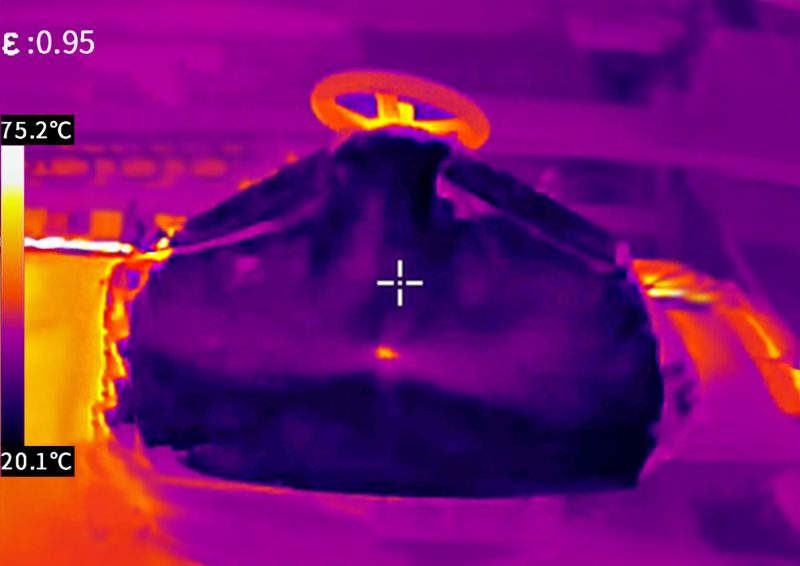
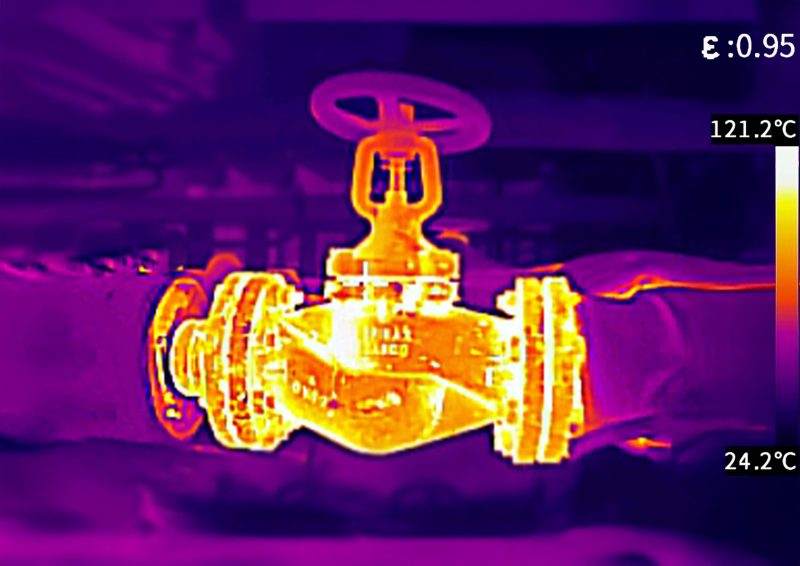
    Thermal imaging – After
    Thermal imaging – Before
    Before
    After

    Thermal image · surface temperature

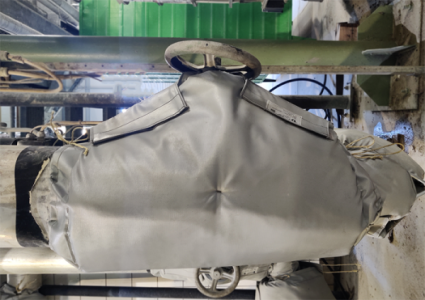
    On-site installation – After
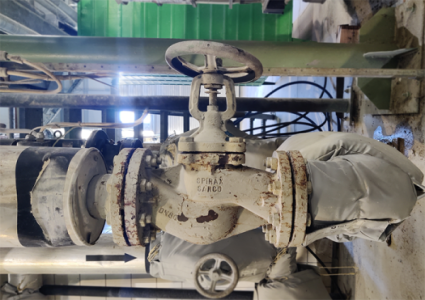
    On-site installation – Before
    Before
    After

    On-site installation · pipework & fittings

    Properties

    Engineered for special applications

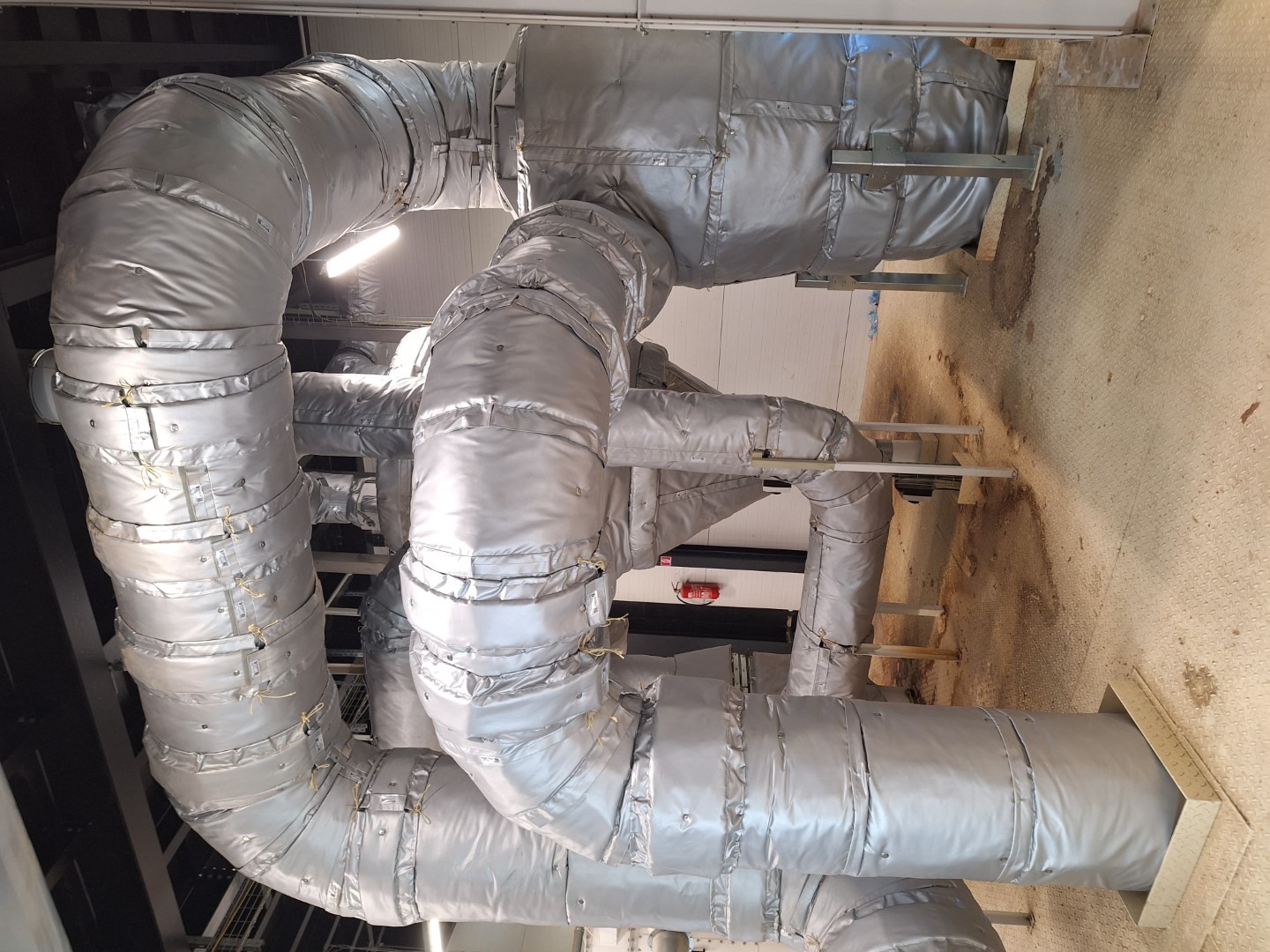
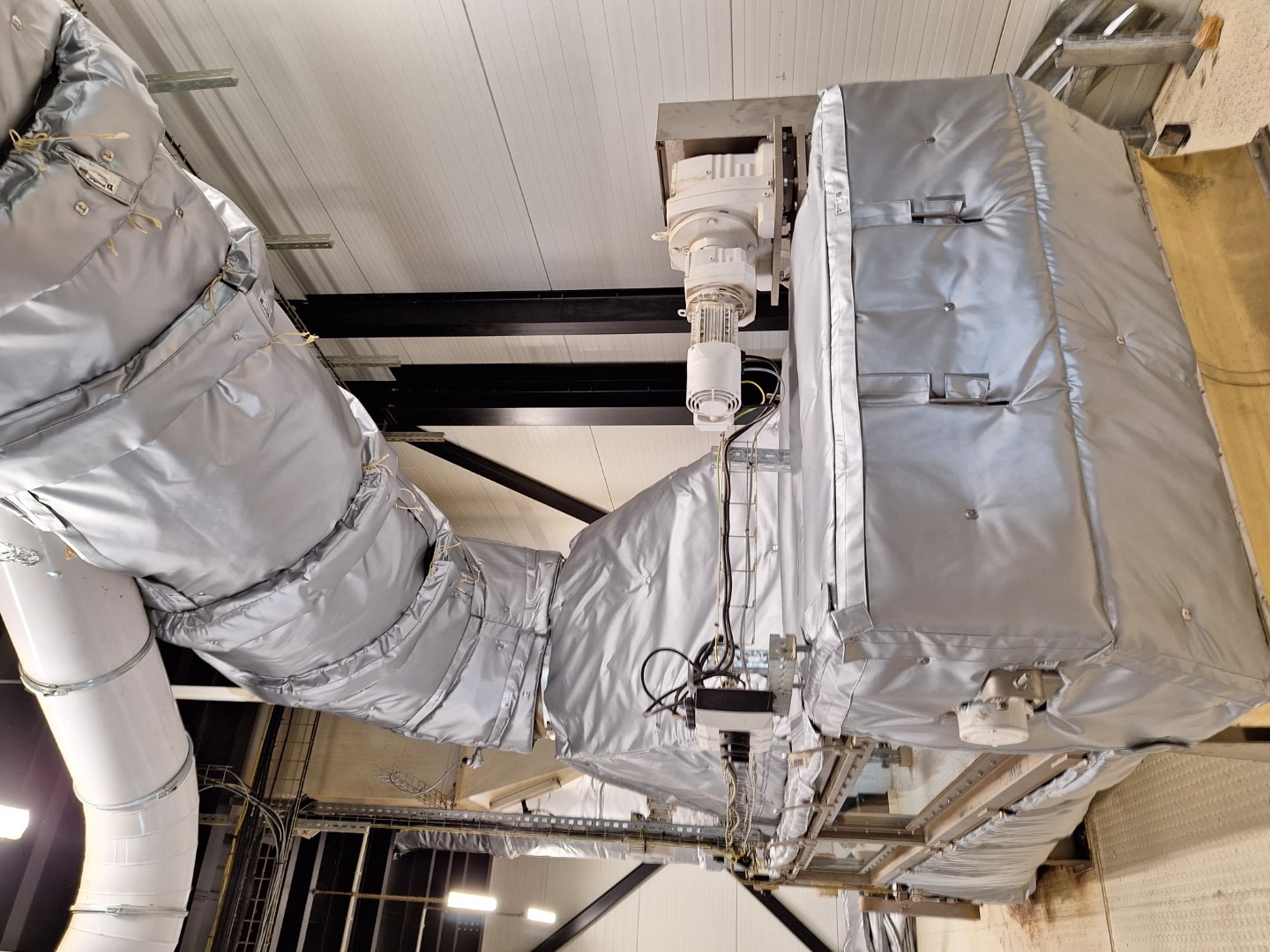
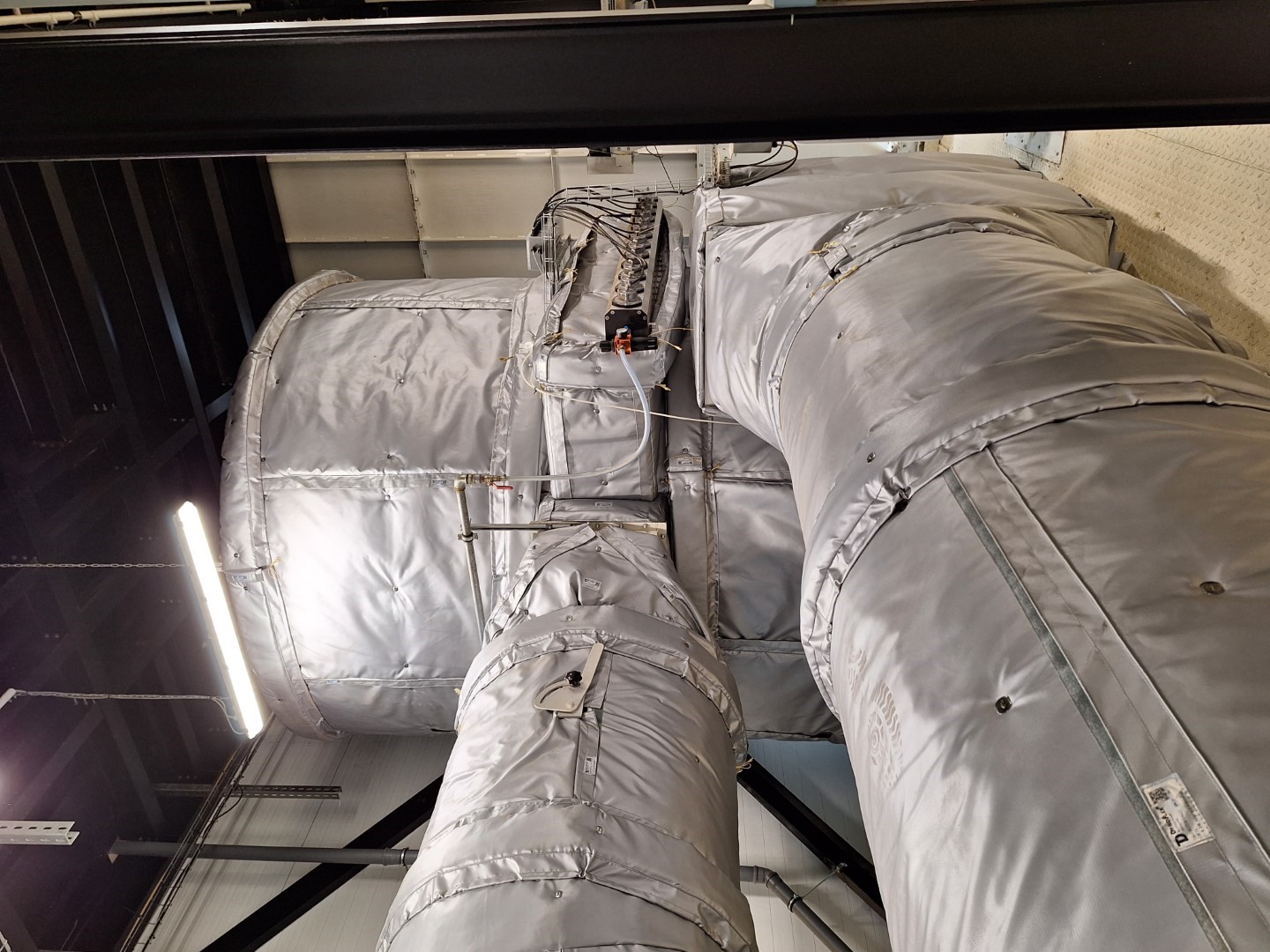
    DynoFlex® blankets are made for industrial environments — extreme duty, chemical and mechanical exposure alike.

    Up to 1000× reusable

    Removable and refittable while preserving the equipment's condition.

    Chemical resistant

    Resists water, oil, acid and alkaline media.

    40+ constructions

    Tailored to complex geometries and high-maintenance components.

    Custom add-ons

    Combined with heating wire or leak detection on request.

    Constructions

    6 standard models, 40+ custom constructions

    DLT150-AL-EG25
    max. 150 °C

    Aluminium-coated — automotive favourite

    For valves, flanges, pumps, heat exchangers. The aluminium coating gives a clean, finished look.

    Most popular
    DLT250-S-EG25
    max. 250 °C

    The most widely used DynoFlex® blanket

    A universal solution for medium-temperature applications on complex geometries.

    DLT300-EX-EG25
    max. 300 °C

    ATEX zone 2, PTFE coated

    Resists splashing chemicals, acids and alkalis. Recommended for explosive environments.

    DMT300-H-EG25
    max. 300 °C

    Designed for thermal oil systems

    For medium and high-temperature thermal oil system insulation.

    DHT550-SWS-RW50
    max. 550 °C

    For high-temperature applications

    For systems above 300 °C — valves, flanges, pumps and heat exchangers.

    DHT650-MSWR-SW50
    max. 650 °C

    Insulation for gas engines and turbines

    Withstands abrasion from surface vibration in high-temperature environments.

    We have a solution for every application — from 150 °C to 1000 °C, automotive to gas turbines.

    MEDIA

    WHICH MEDIA DO WE INSULATE?

    Steam

    From an insulation engineering perspective, the largest reduction in final energy consumption can be achieved with insulation projects carried out on steam systems. Uninsulated surfaces typically operate between 90–180 °C. Most of them were left uninsulated because of their maintenance requirements — and this is exactly what our DynoFlex insulation solves. Typical surfaces to be insulated: boiler front and rear plates, manholes, steam system valves, condensate lines, feed pumps, etc.
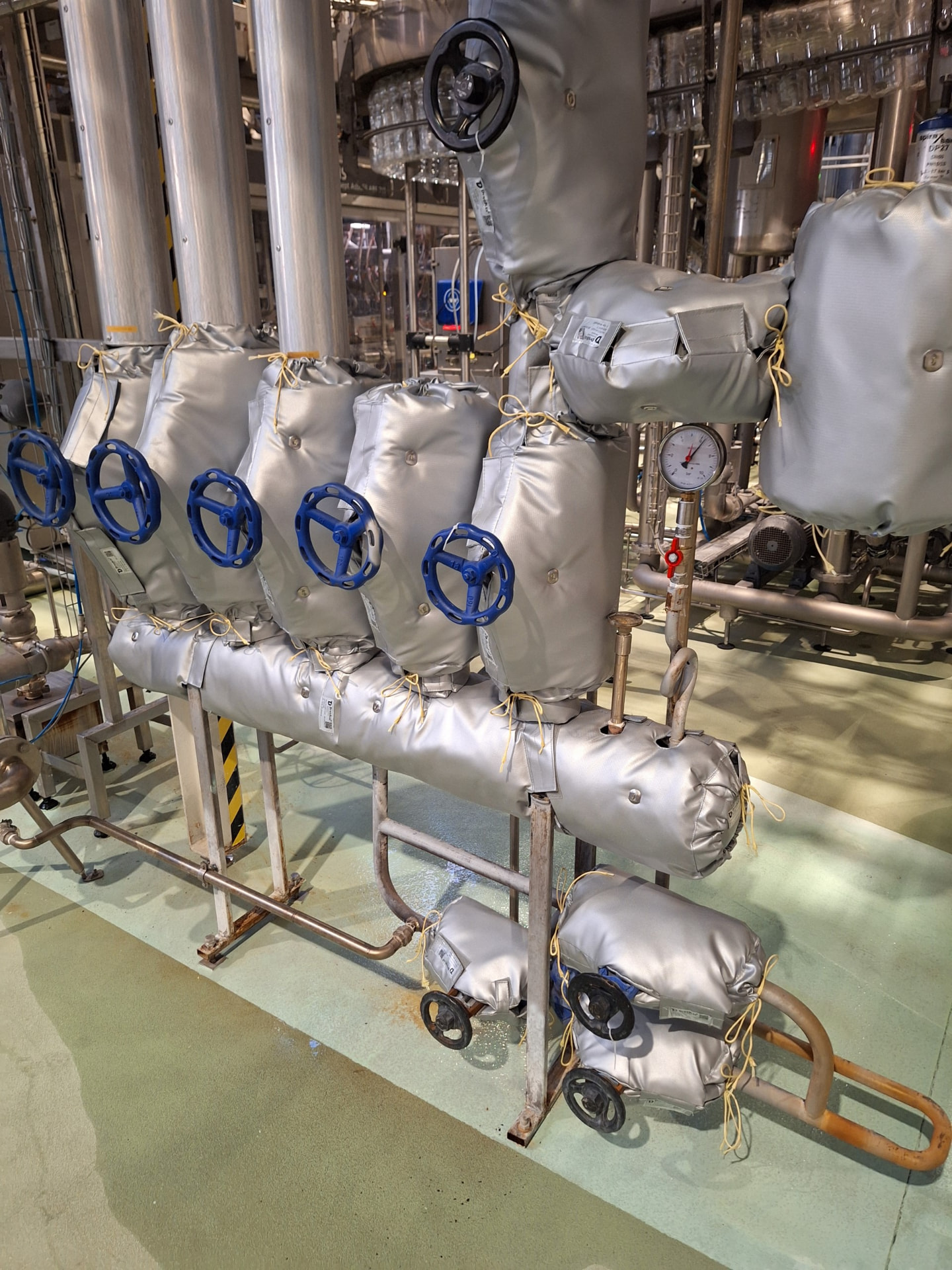
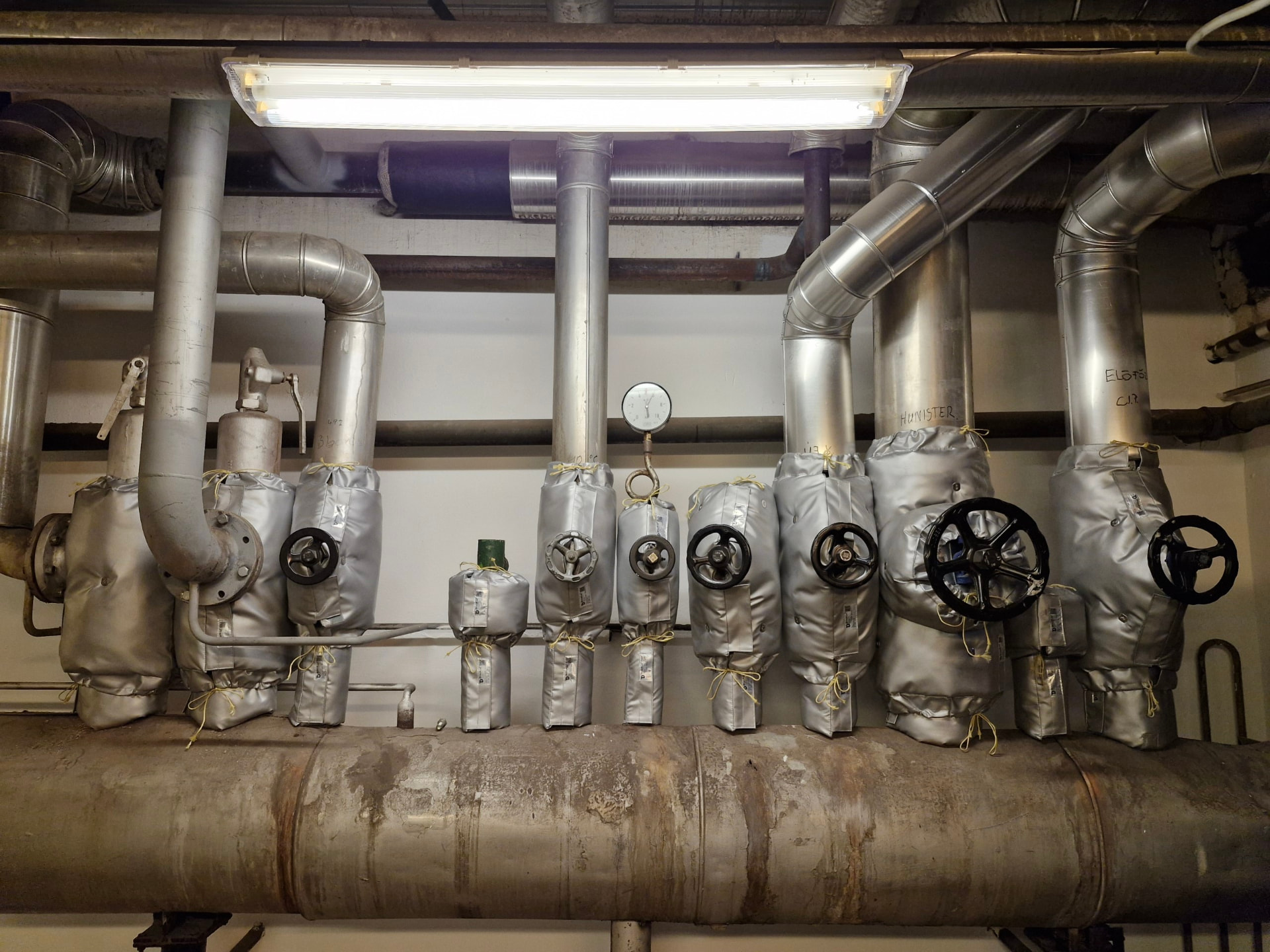
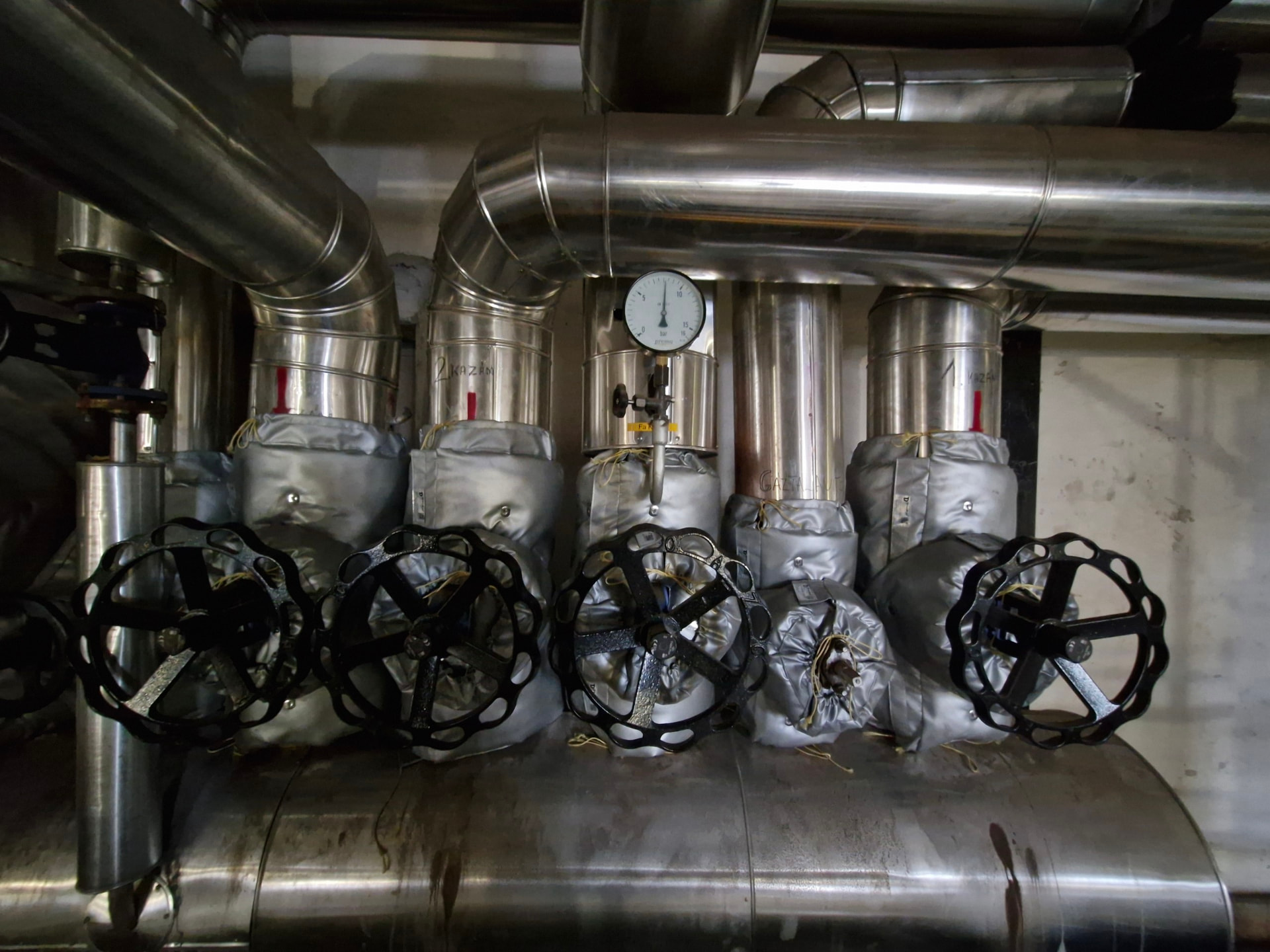
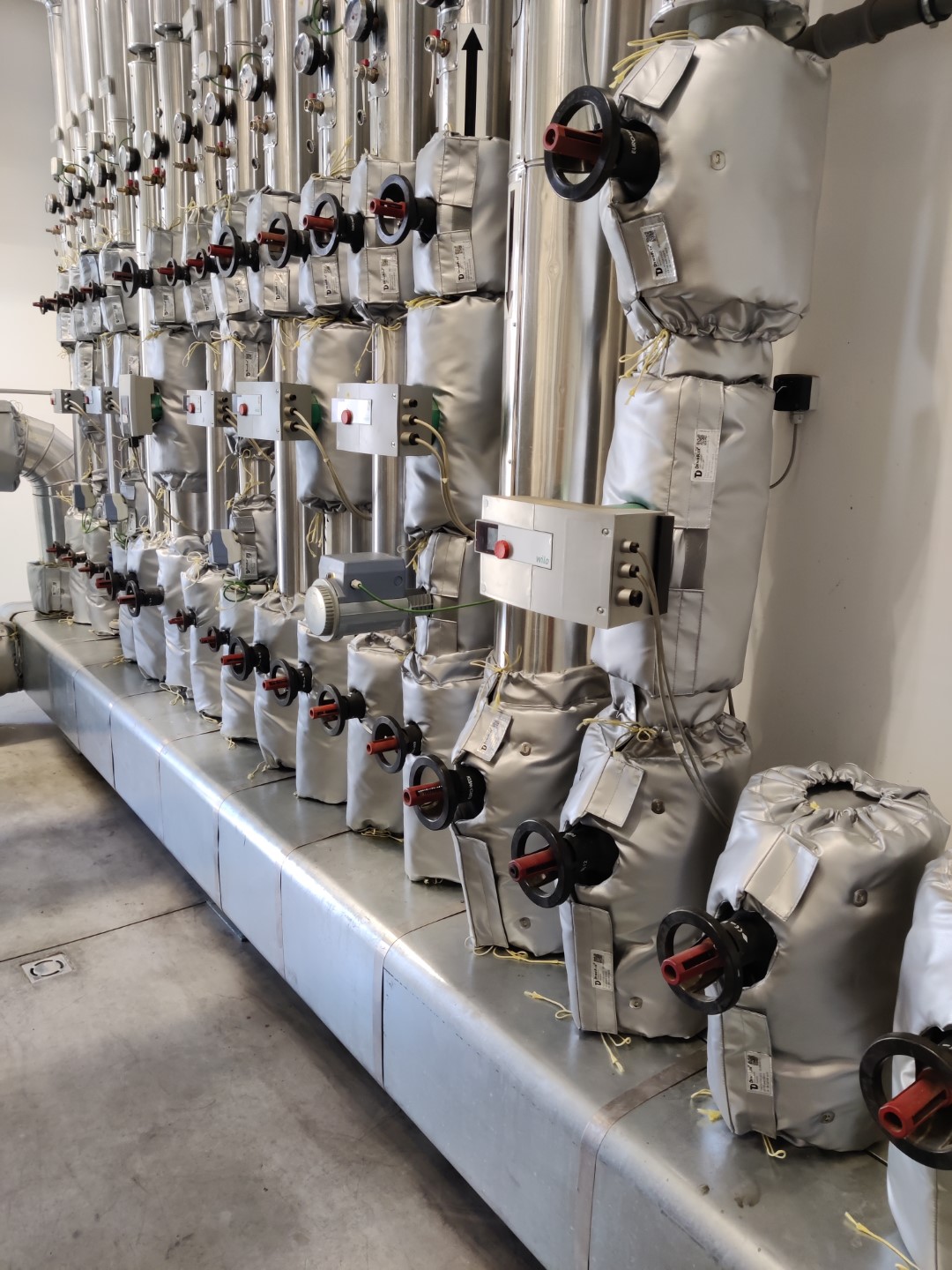
    Insulated steam system valves in a beverage plant
    Insulation of steam system valves
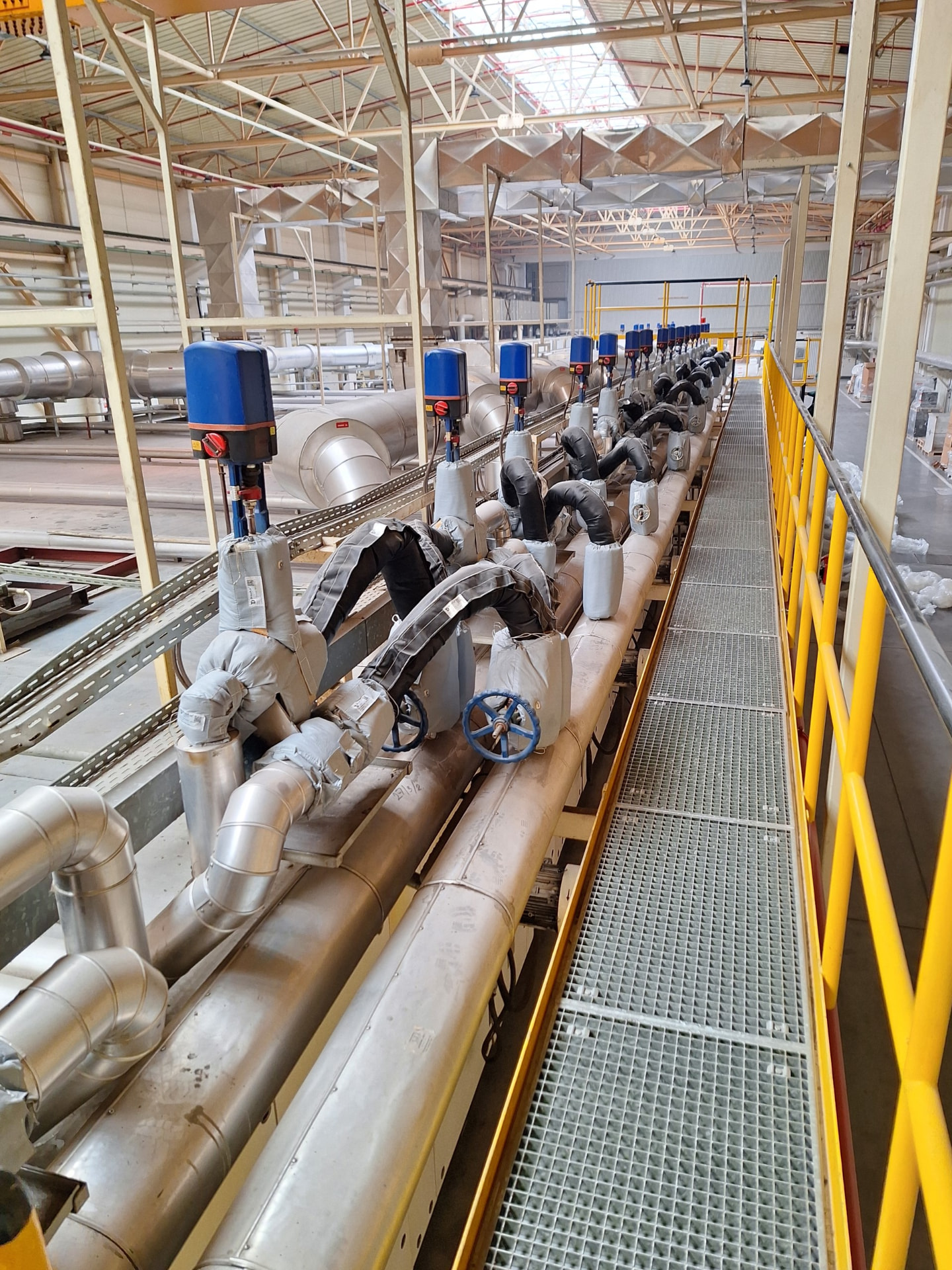
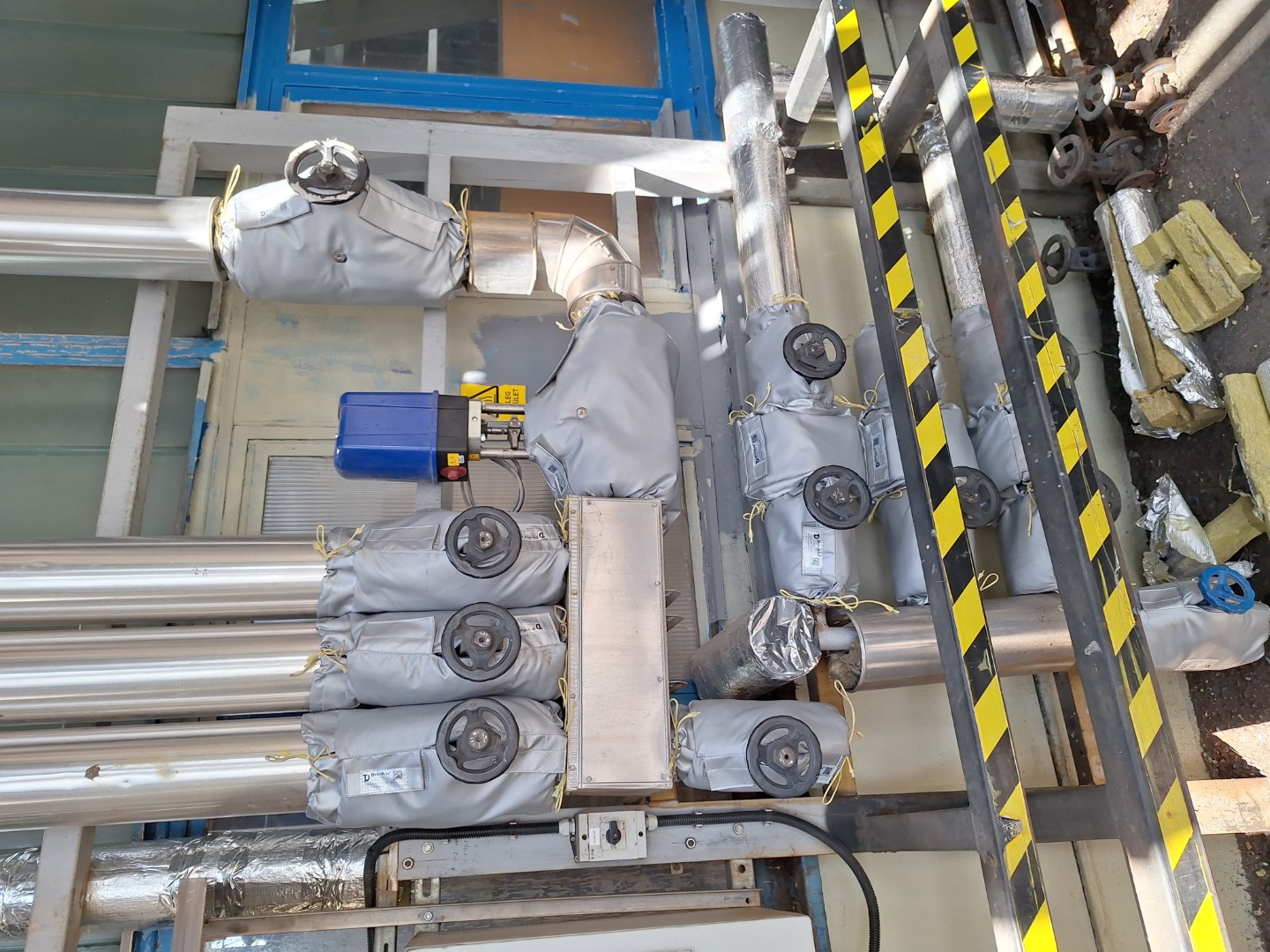
    Steam distribution valve row with insulation jackets
    Steam distribution valve row
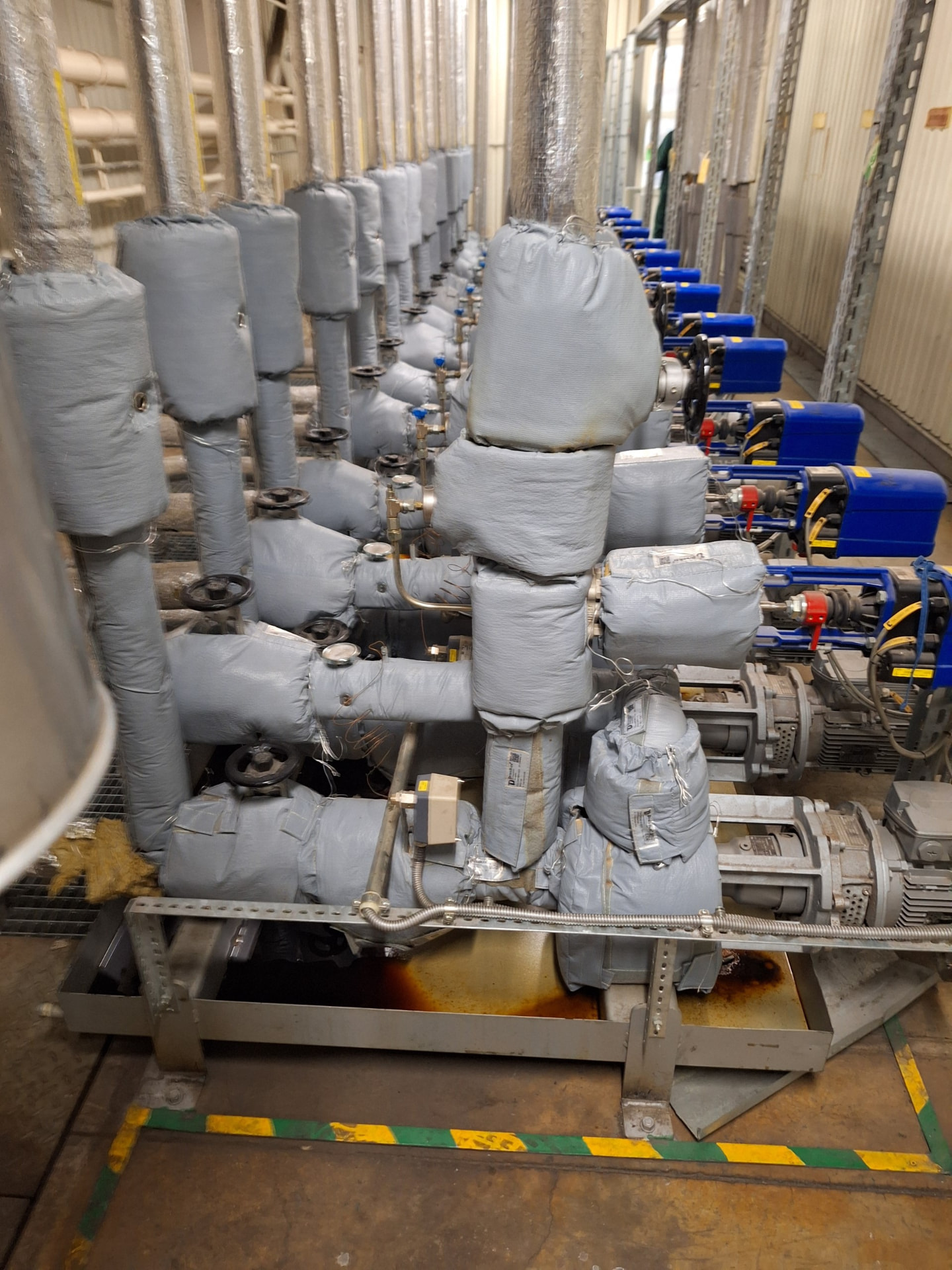
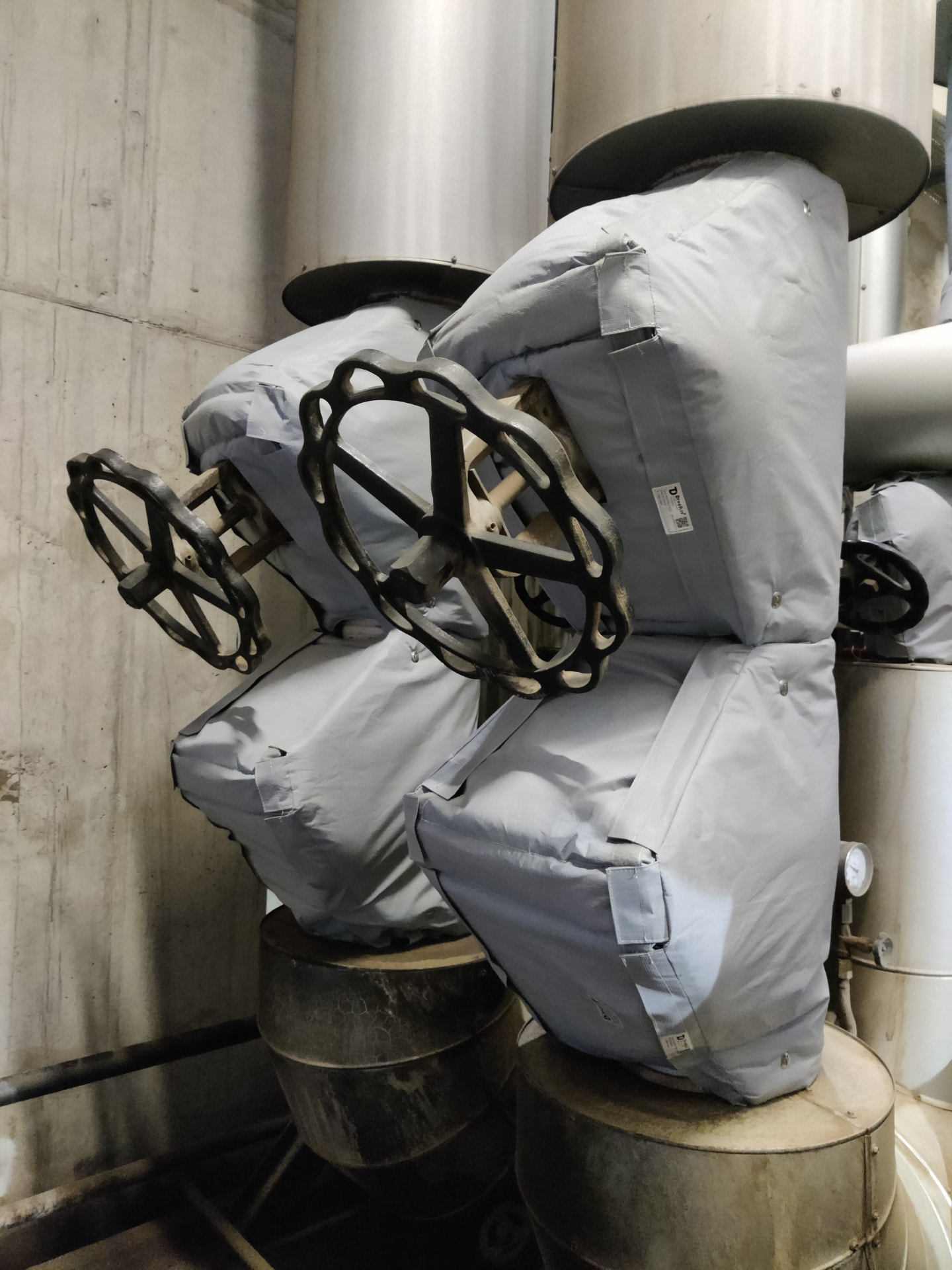
    Boiler house steam valves with DynoFlex insulation jackets
    Boiler house steam valves

    Can steam traps also be insulated?

    Among steam traps, float-type units can be insulated; thermodynamic and thermostatic traps cannot, due to their operating principle.

    Can the feed pump be insulated?

    On feed pumps we insulate the pump body, which represents the largest heat-emitting surface, leaving the motor and the coupling housing free. This way the thermal load on critical parts remains unchanged and the pump's service life is not affected.

    Doesn't insulating the sight glass eliminate its function?

    For sight glasses we take the function of the fitting into account both during design and manufacturing, and we leave the viewing glass surfaces free.
    Hot water

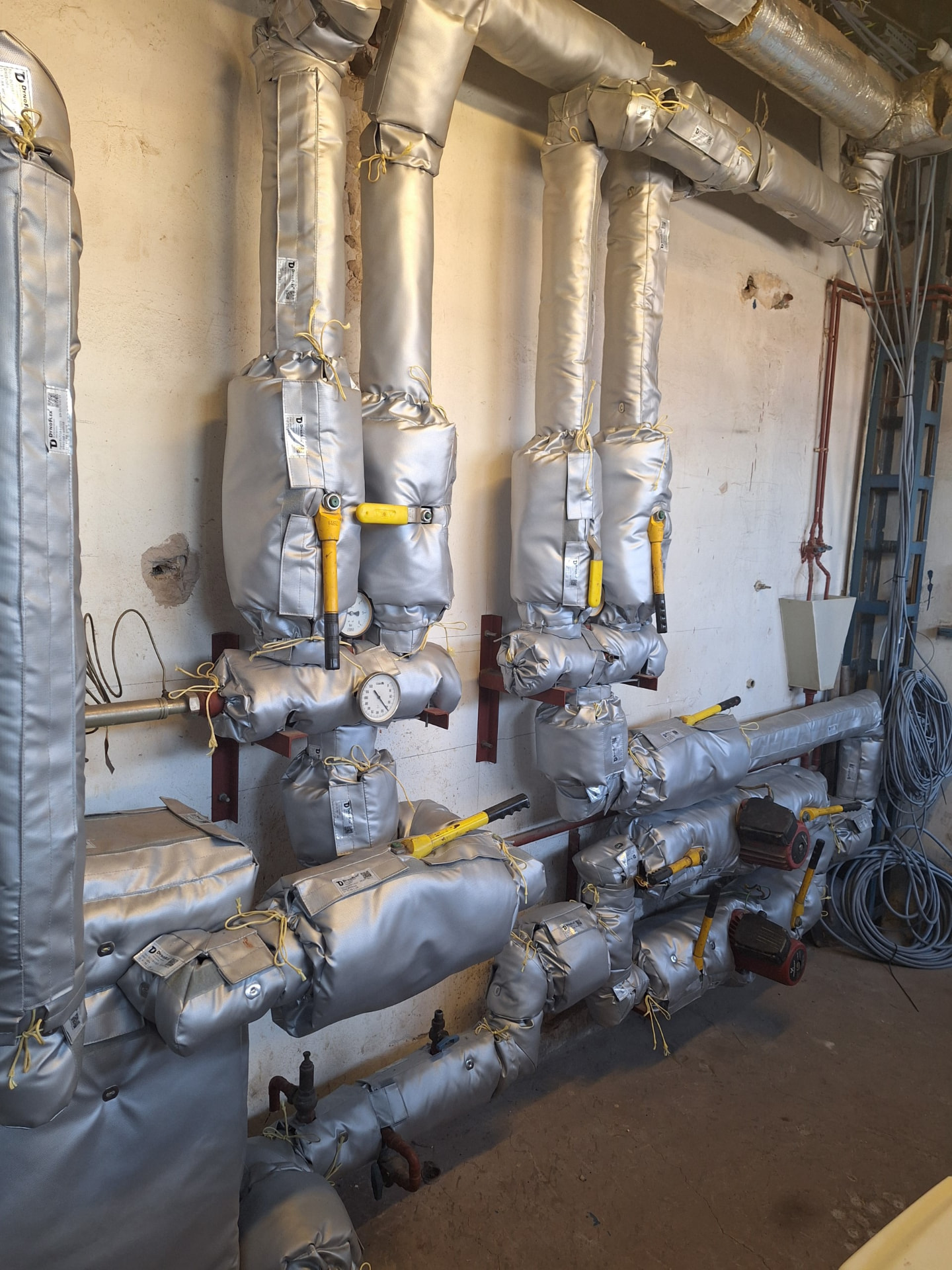
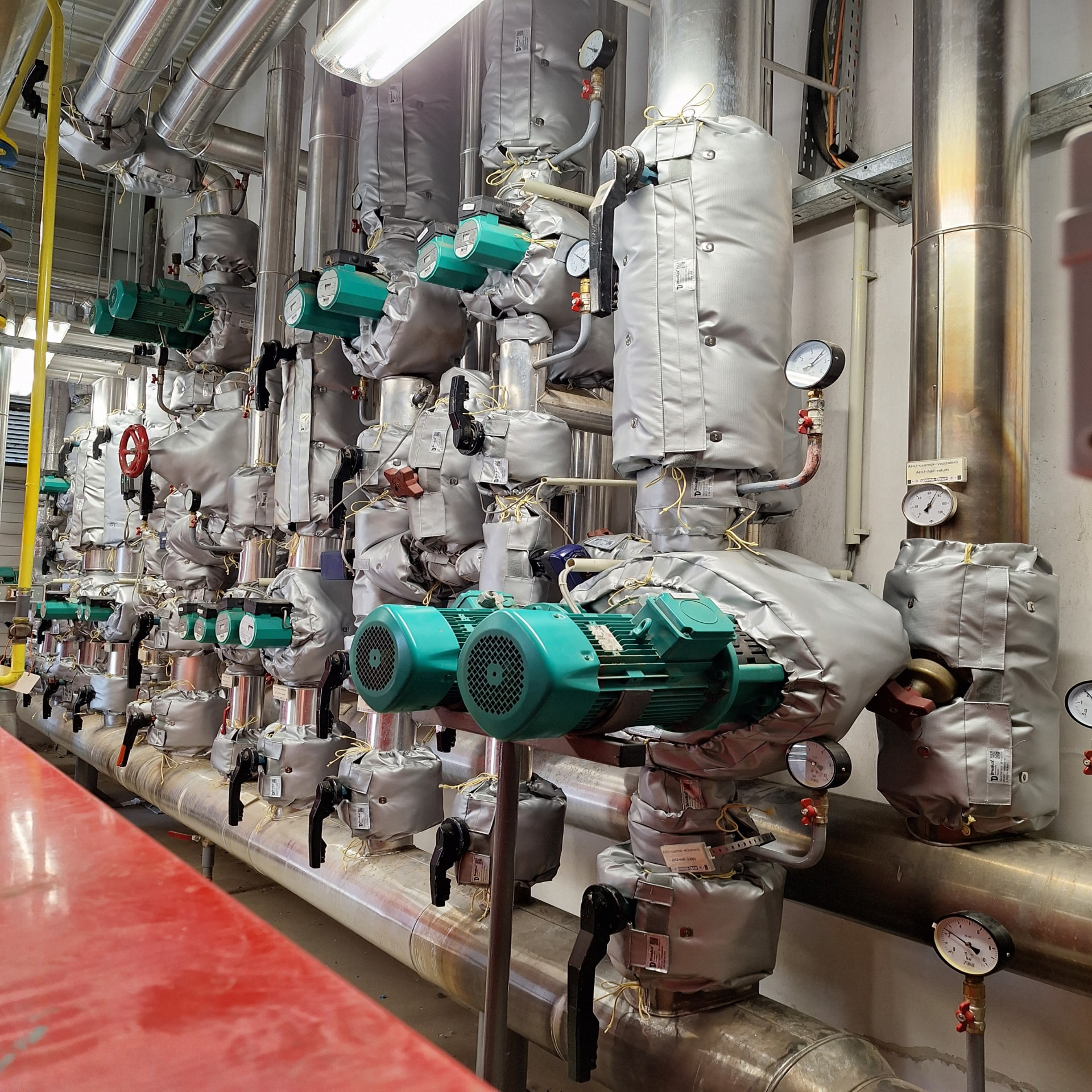
    Significant savings potential mainly arises in extensive heating systems, due to the large number of heat centres and individual boilers. In many cases the technology also includes sub-processes with lower heat demand, where generating steam for heat transfer is uneconomical. Temperatures between 40–100 °C are typical for these systems. Typical surfaces to be insulated: boiler front plate, heating manifolds, heat exchangers, valves, tanks.

    Thermal oil

    Thermal oil is the heat transfer medium used in technologies with higher heat demand. The medium flows above 200 °C, so every uninsulated surface results in extremely high heat loss. Because of the extremely high temperature and the increased fire hazard, it is essential that energy efficiency measures are carried out by an experienced, expert team. Typical surfaces: boiler surfaces, valves, stuffing boxes of welded fittings, centrifugal pumps.

    Other media

    Along the path of media heated by steam, thermal oil or hot water, we also find system components that operate uninsulated with significant heat loss because of their maintenance requirements. Insulating these delivers the same savings as insulating the surfaces of the heat distribution system.

    SURFACES

    WHICH SURFACES DO WE INSULATE?

    Boilers

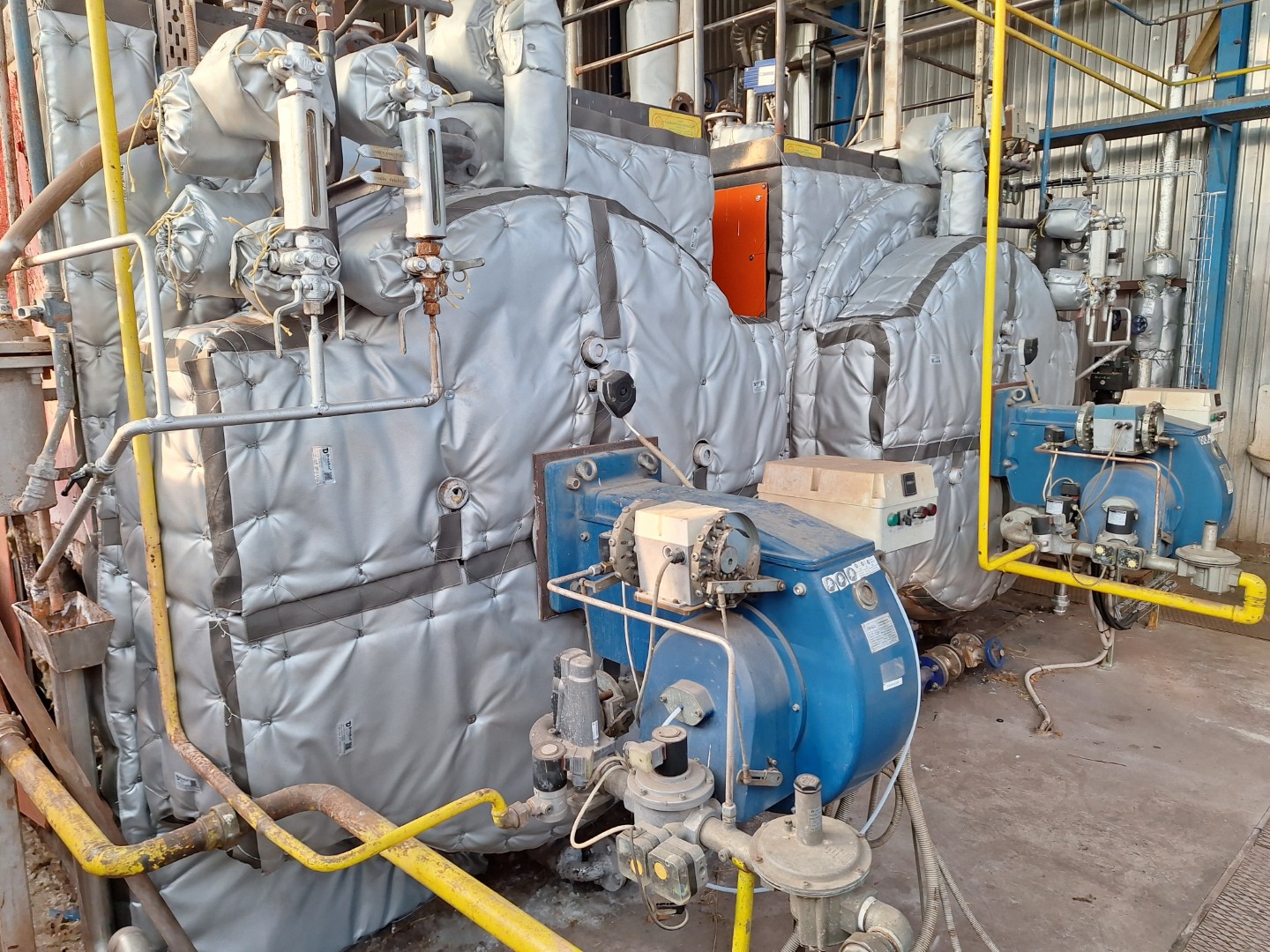
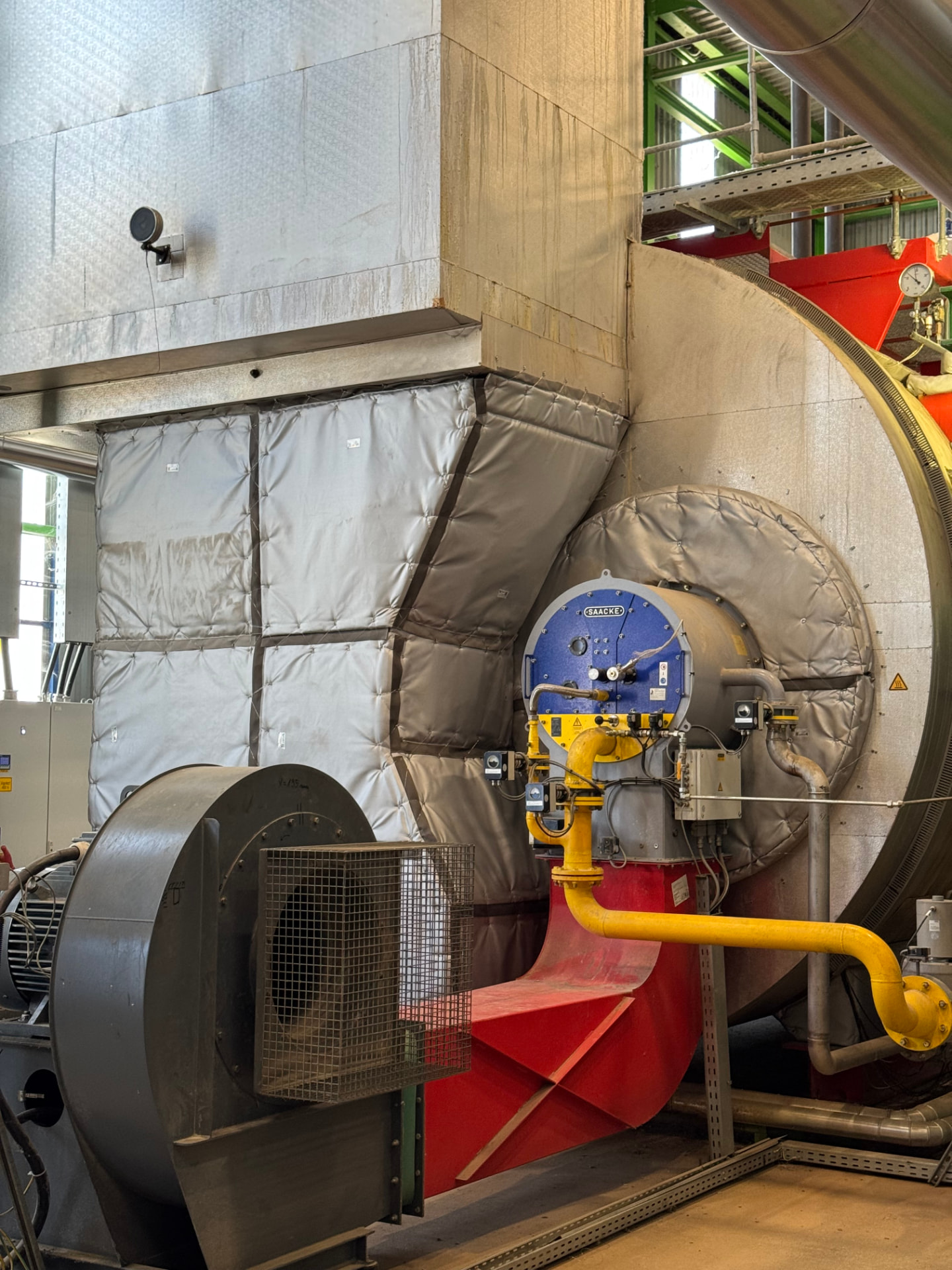
    It is advisable to start improving system efficiency at the source of heat generation. When steam and hot water boilers are installed, the boiler body is always insulated, but the front and rear plates, the area around the burner, manholes and cleaning openings and outlet valves almost always remain uninsulated. The reason is that conventional hard-clad insulation would have to be rebuilt at least once a year, as it cannot be removed without destruction. Our sewn, reusable DynoFlex insulation solves this problem. With insulation jackets, many currently uninsulated boiler surfaces can be insulated in a way that allows repeated non-destructive removal and refitting during maintenance.

    Steam boilers with sewn insulation jackets in a boiler house
    Insulation of steam boilers
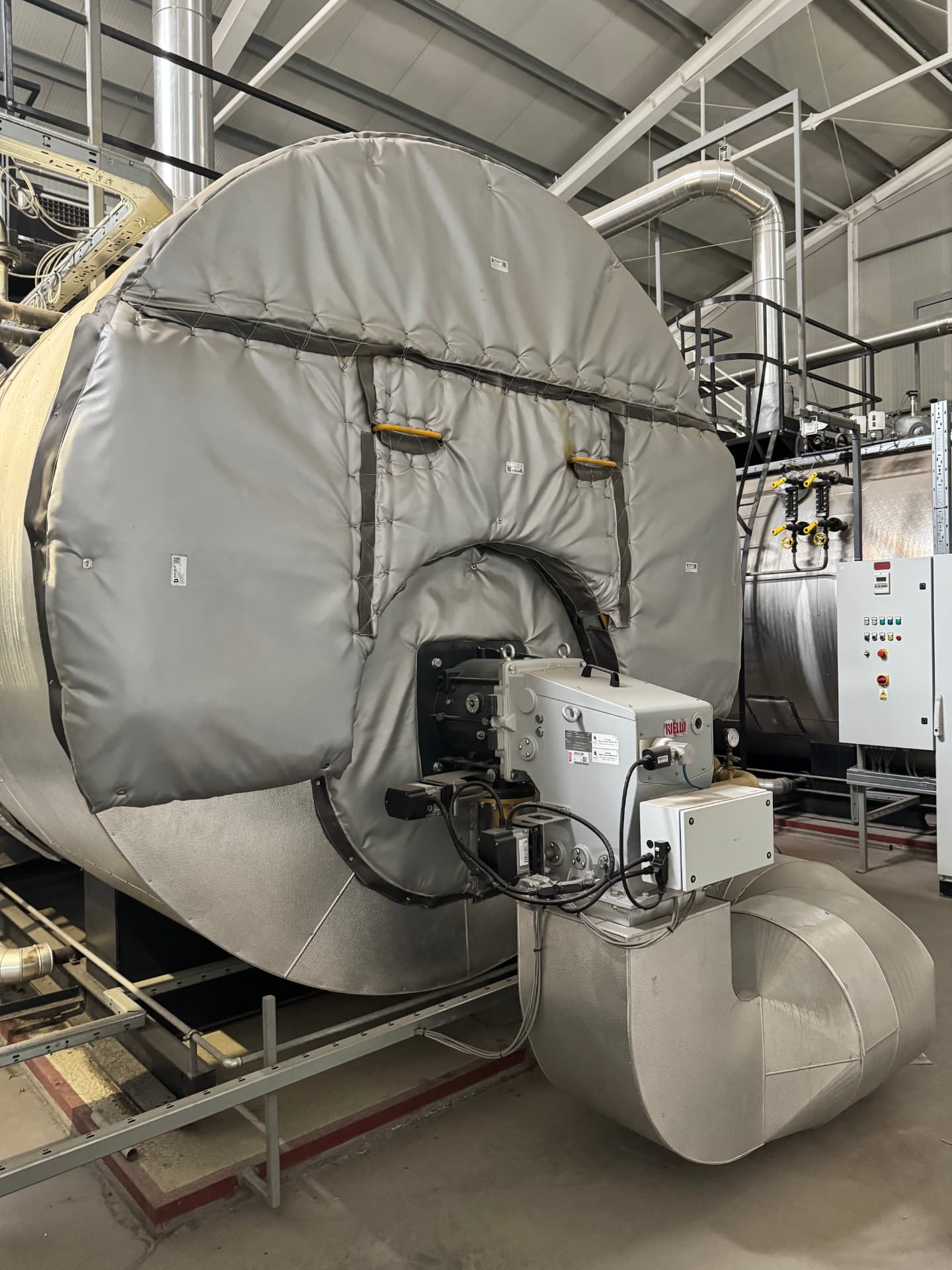
    Insulation of the front and rear plate of a steam boiler around the burner
    Boiler front plate insulation
    Insulated steam boiler rear plate and outlet valves
    Boiler rear plate and valves

    Why do we insulate the front and rear plates of the boiler?

    Boiler front and rear plates are typically left uninsulated for maintenance reasons, as in most cases they are opened at least once a year. However, these surfaces — sometimes several tens of square metres — continuously release heat to the environment, reducing the efficiency of heat generation.

    Which surfaces can be insulated in a boiler house?

    From the uninsulated surfaces of the boiler through the valves and heat exchangers of the heating medium to the detachable connections, valves and pumps of the condensate and feedwater systems, every surface above 40 °C is worth examining.

    Why is 550 °C insulation used on boiler front and rear plates when the average surface temperature is 80 °C?

    On the front and rear plates of the boiler — along the sealing cord line or around the sight glass — there may be areas where the surface temperature reaches 250 °C. The most frequently used DynoFlex construction, DLT250-S-EG25, is rated to a maximum of 250 °C, so for safety reasons a construction with higher temperature resistance is required.

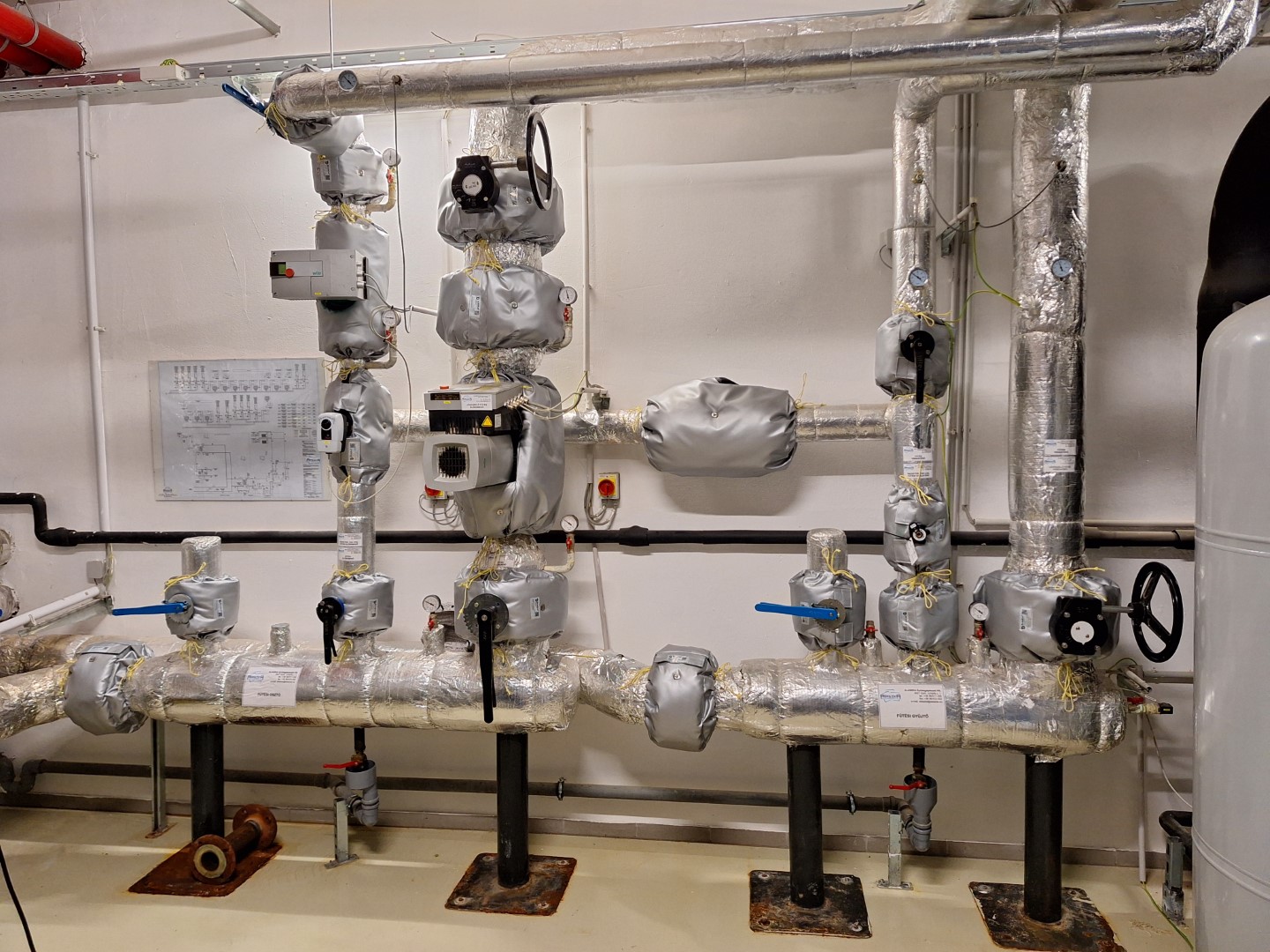
    Valves and fittings

    Every heat transfer system contains flanged connections and various fittings and valves. Most of them operate uninsulated with high heat loss because of their maintenance requirements. Shut-off valves, gate valves, strainers, separators, control valves, flanged and welded fittings and threaded valves can all be equipped with sewn, reusable insulation. Using DynoFlex insulation jackets increases system efficiency and provides fast access during maintenance.

    Heat exchangers

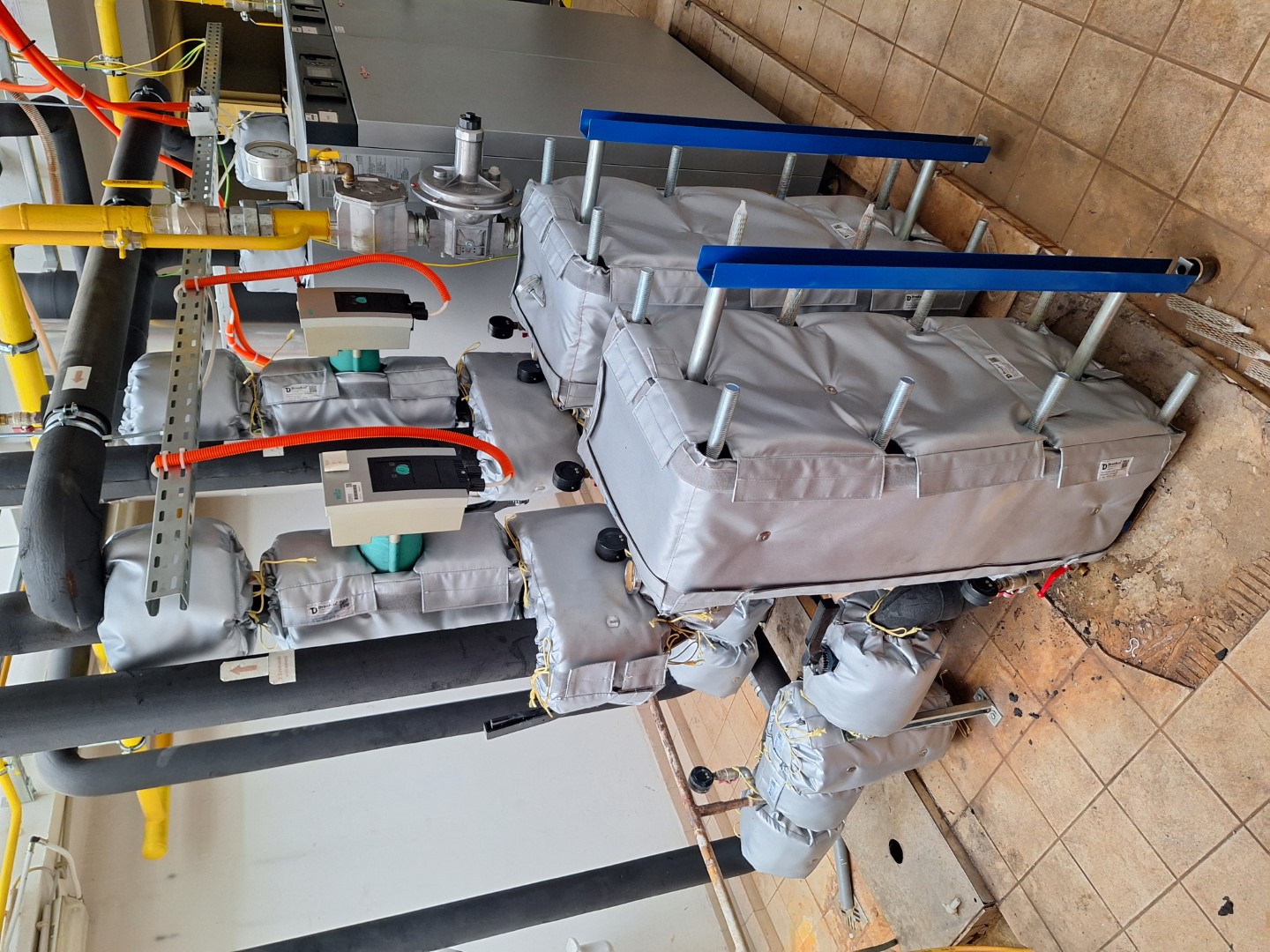
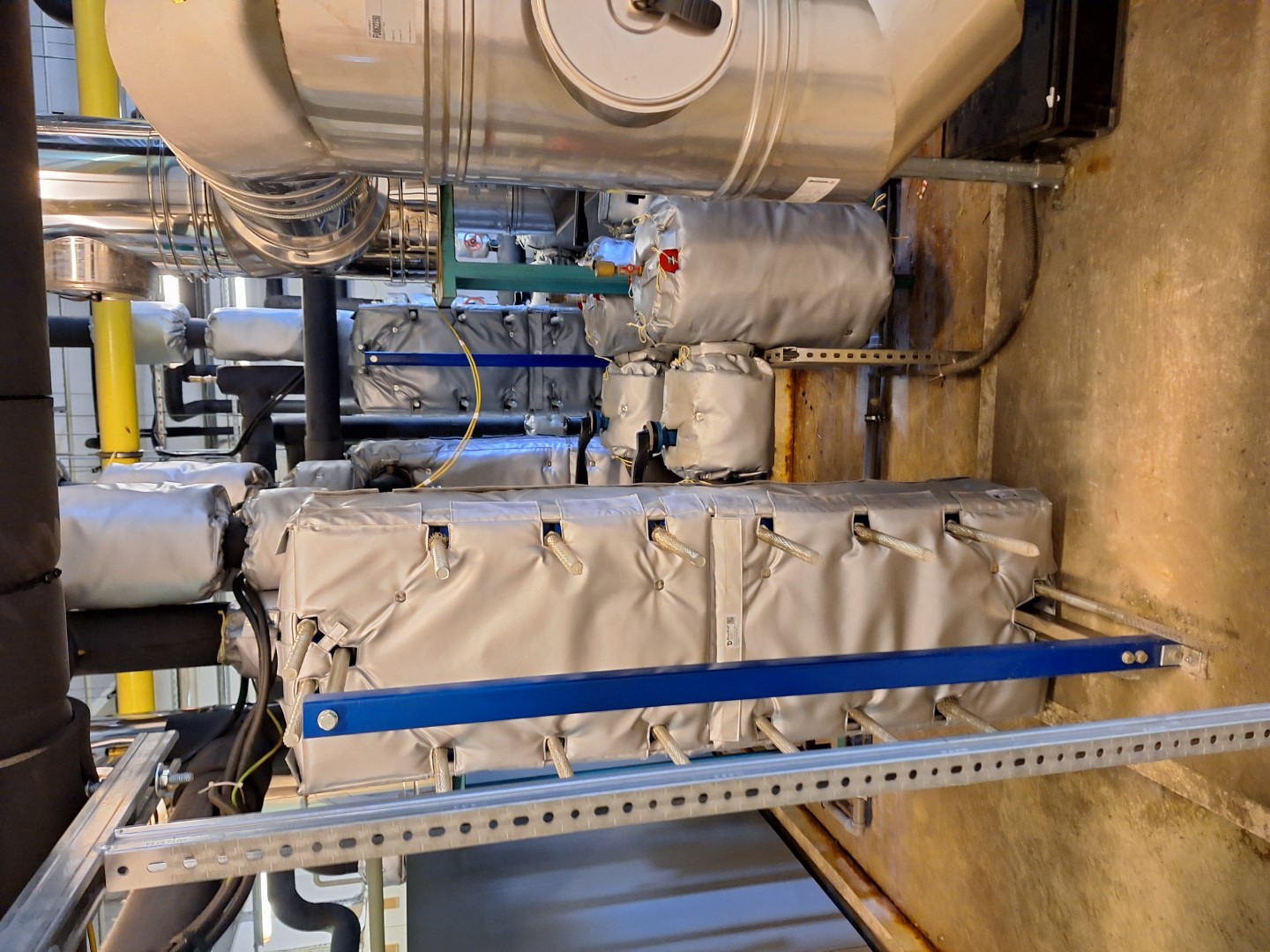
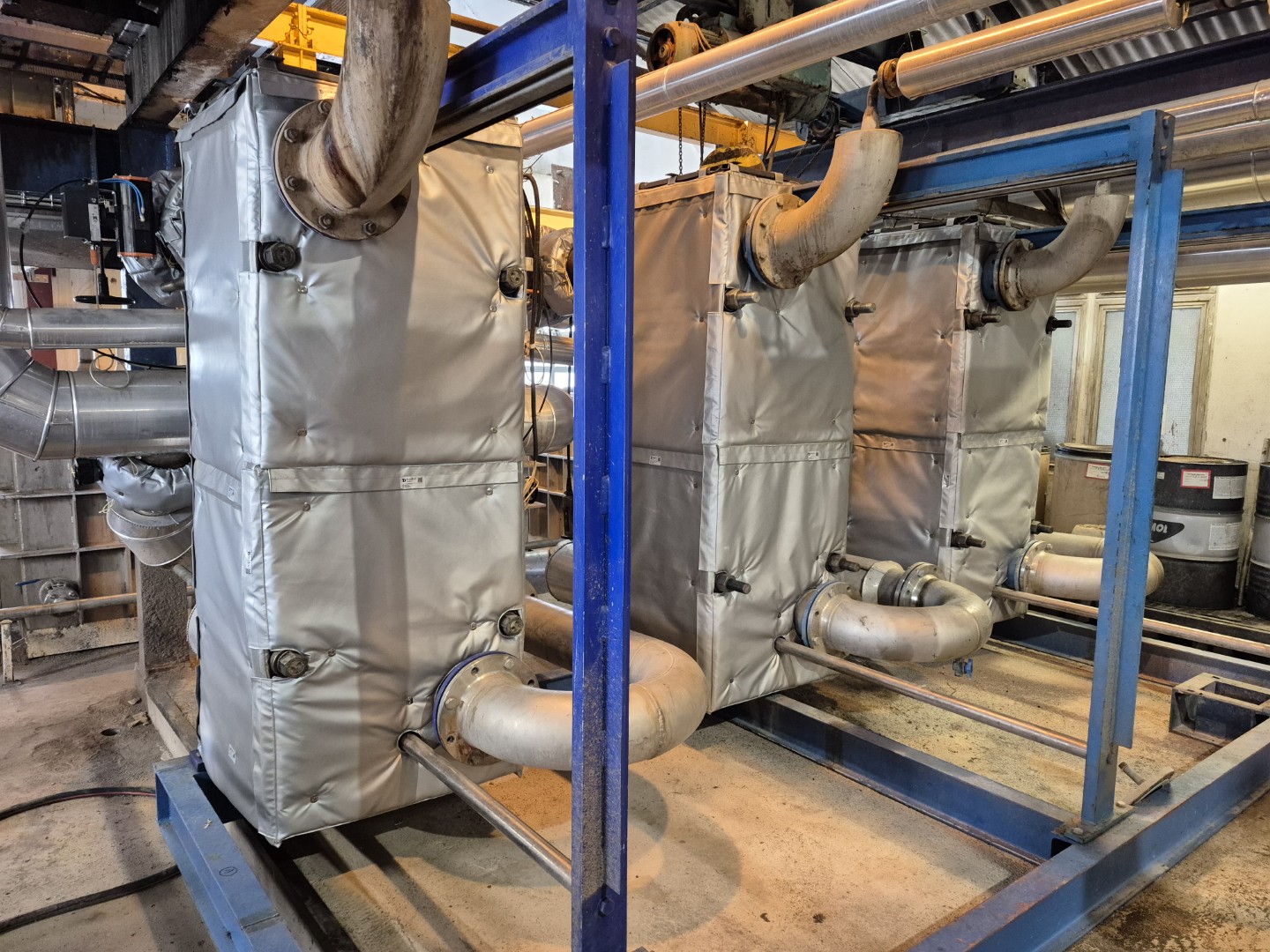
    A heat exchanger is a device in which continuous heat transfer takes place from one medium to another. In such cases, uninsulated surfaces heat the environment in addition to the medium to be heated. This heat loss can be reduced with insulation. Because of their maintenance requirements, insulation jackets are the optimal technological solution. Both shell-and-tube and plate heat exchangers can be insulated with DynoFlex insulation jackets. Besides reducing the thermal load on the environment, this also increases the efficiency of the heat exchanger.

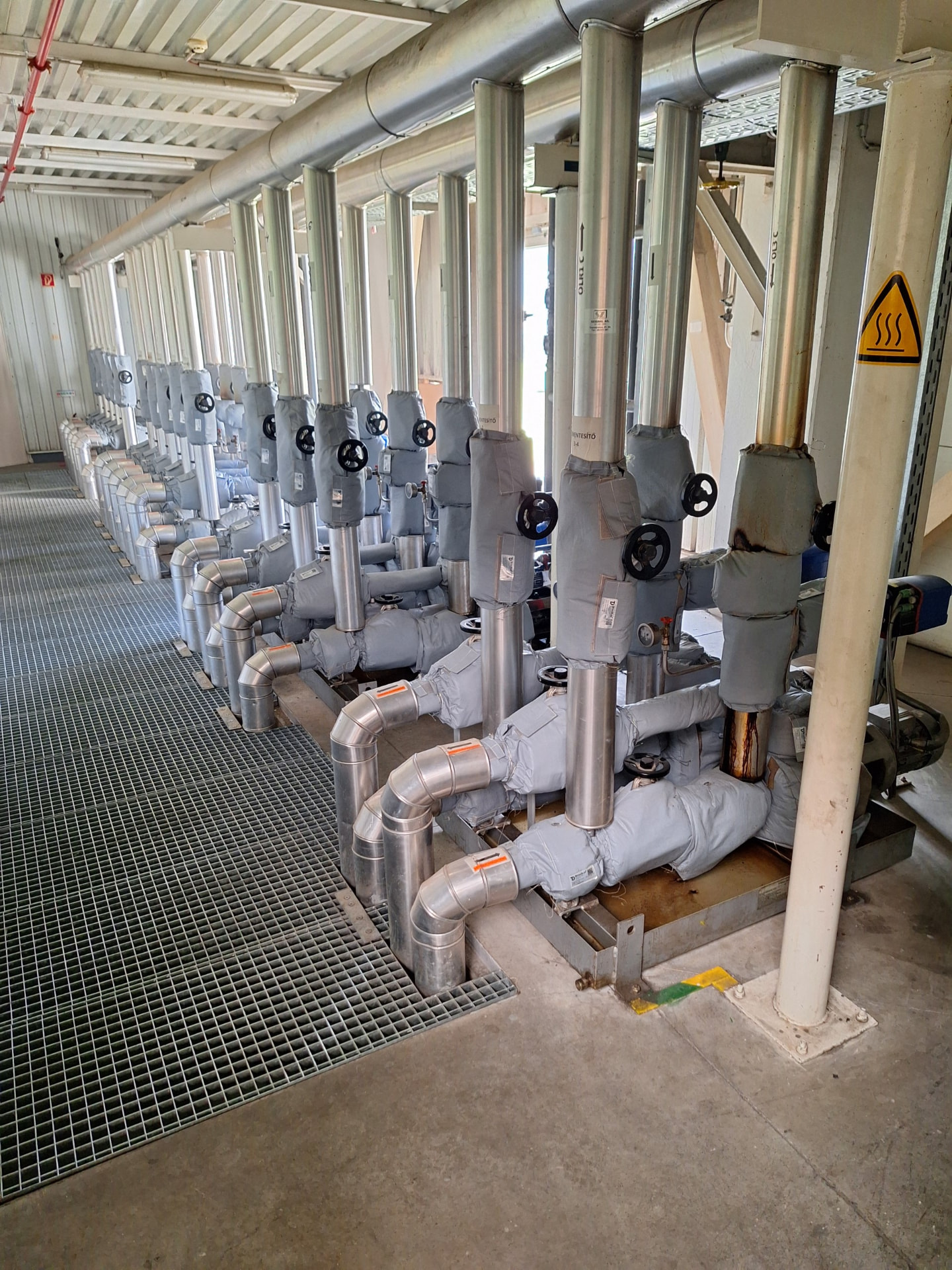
    Pumps

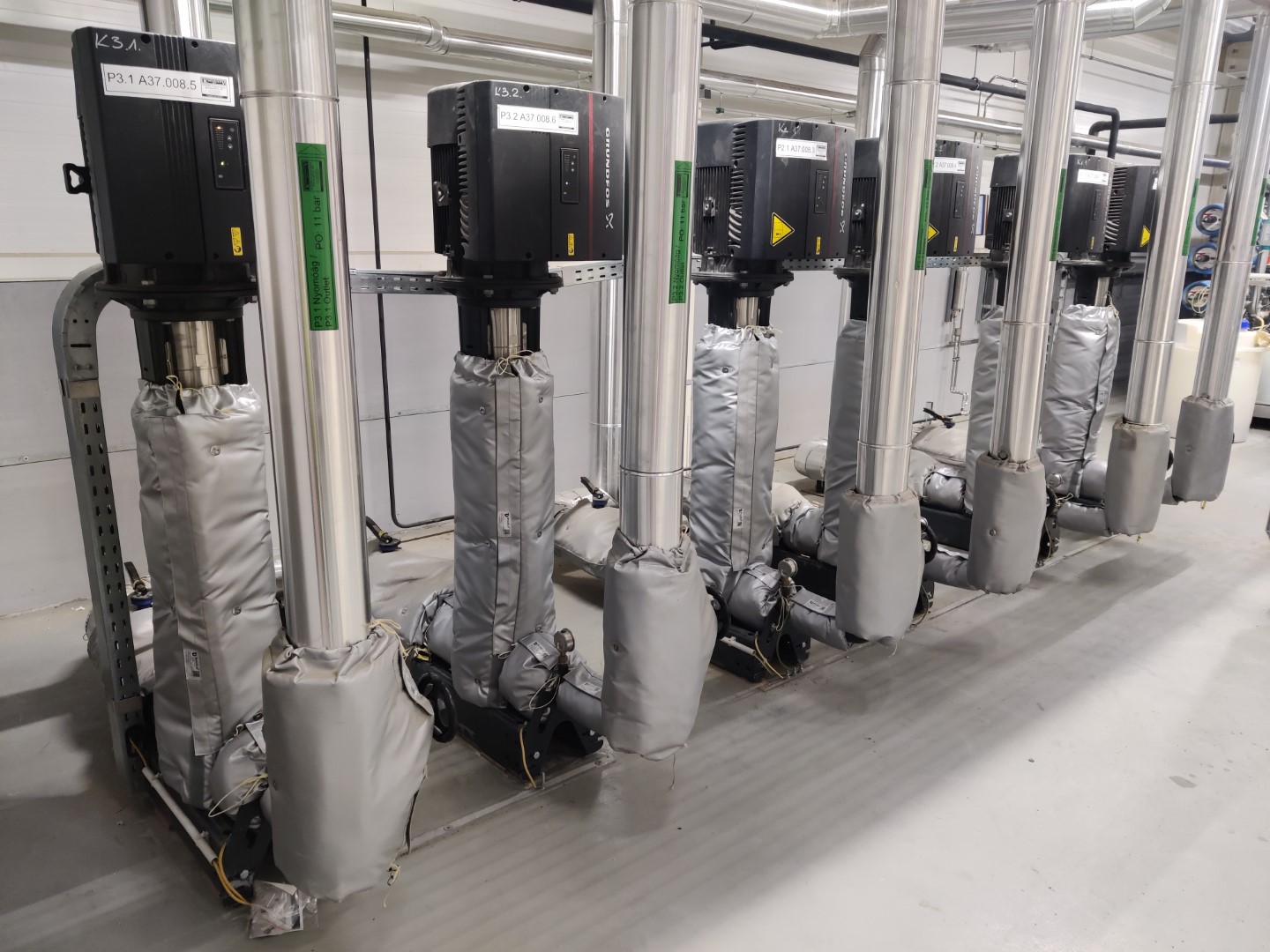
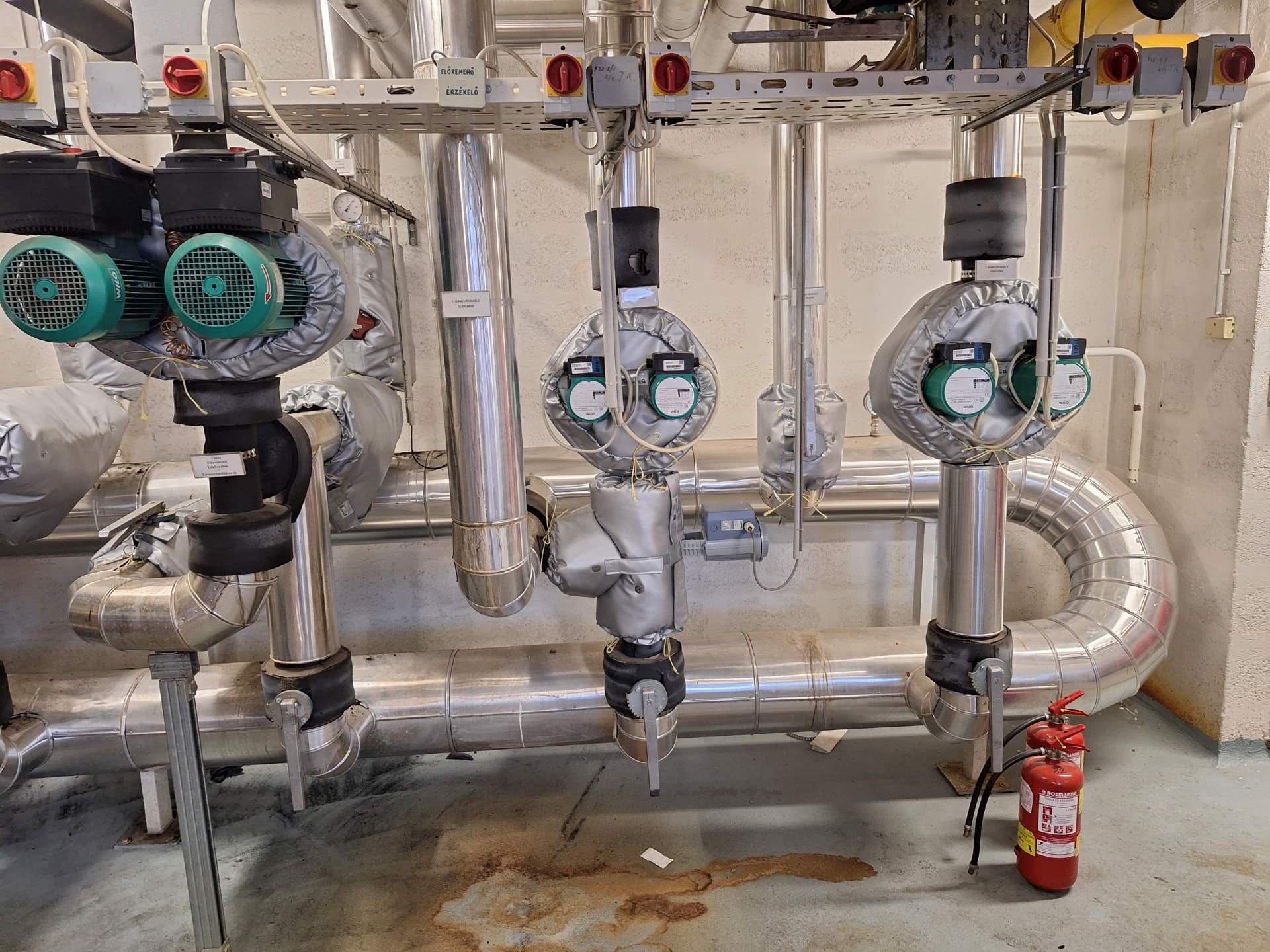
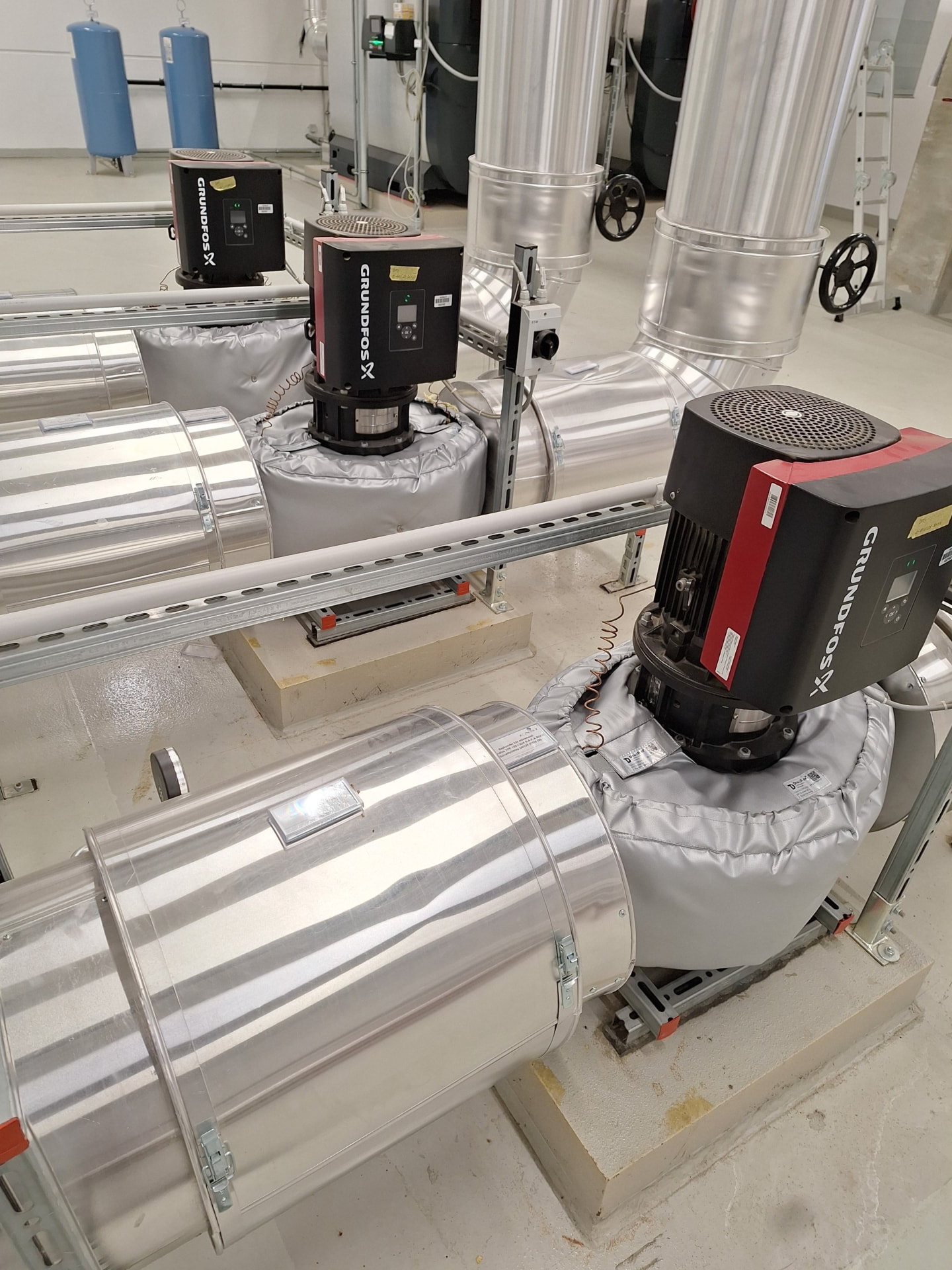
    Different pump types can be used to circulate our media, depending on the circumstances. Wherever it is important that the circulated medium does not lose temperature, it is advisable to insulate the pumps. Because of their complex geometry and maintenance requirements, reusable DynoFlex insulation jackets are recommended on heating circulation pumps, feed pumps and centrifugal pumps alike.

    Extruders

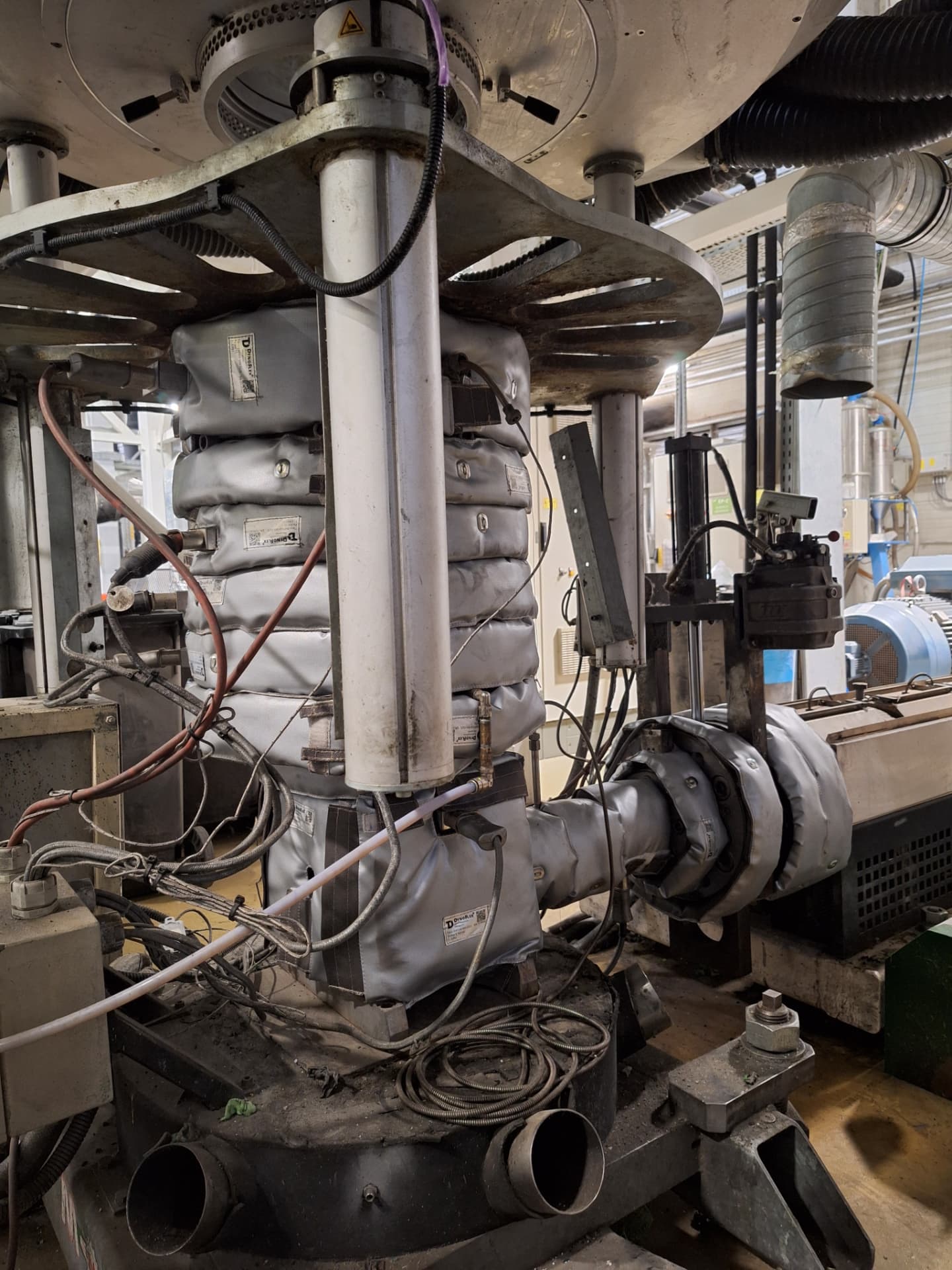
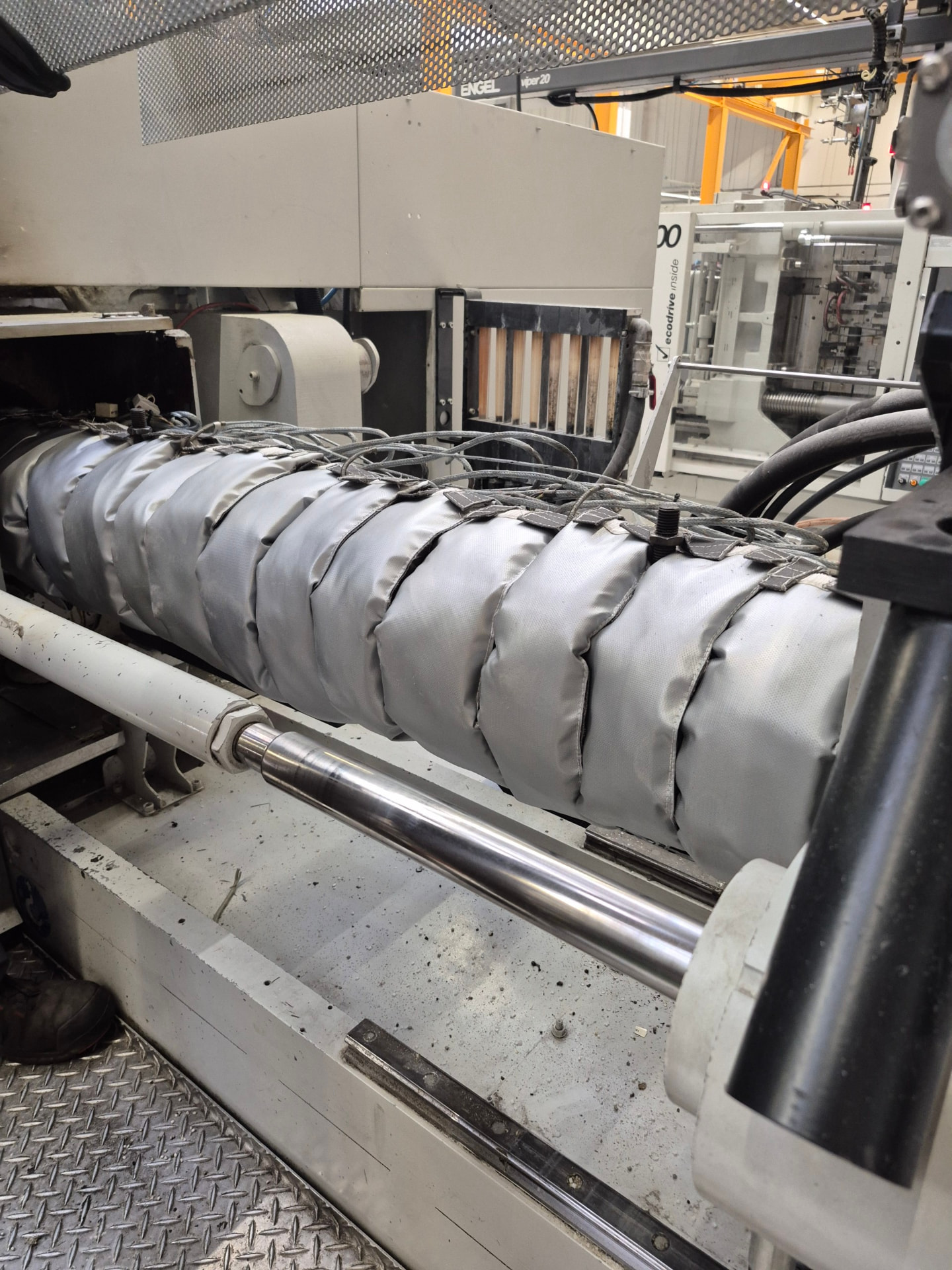
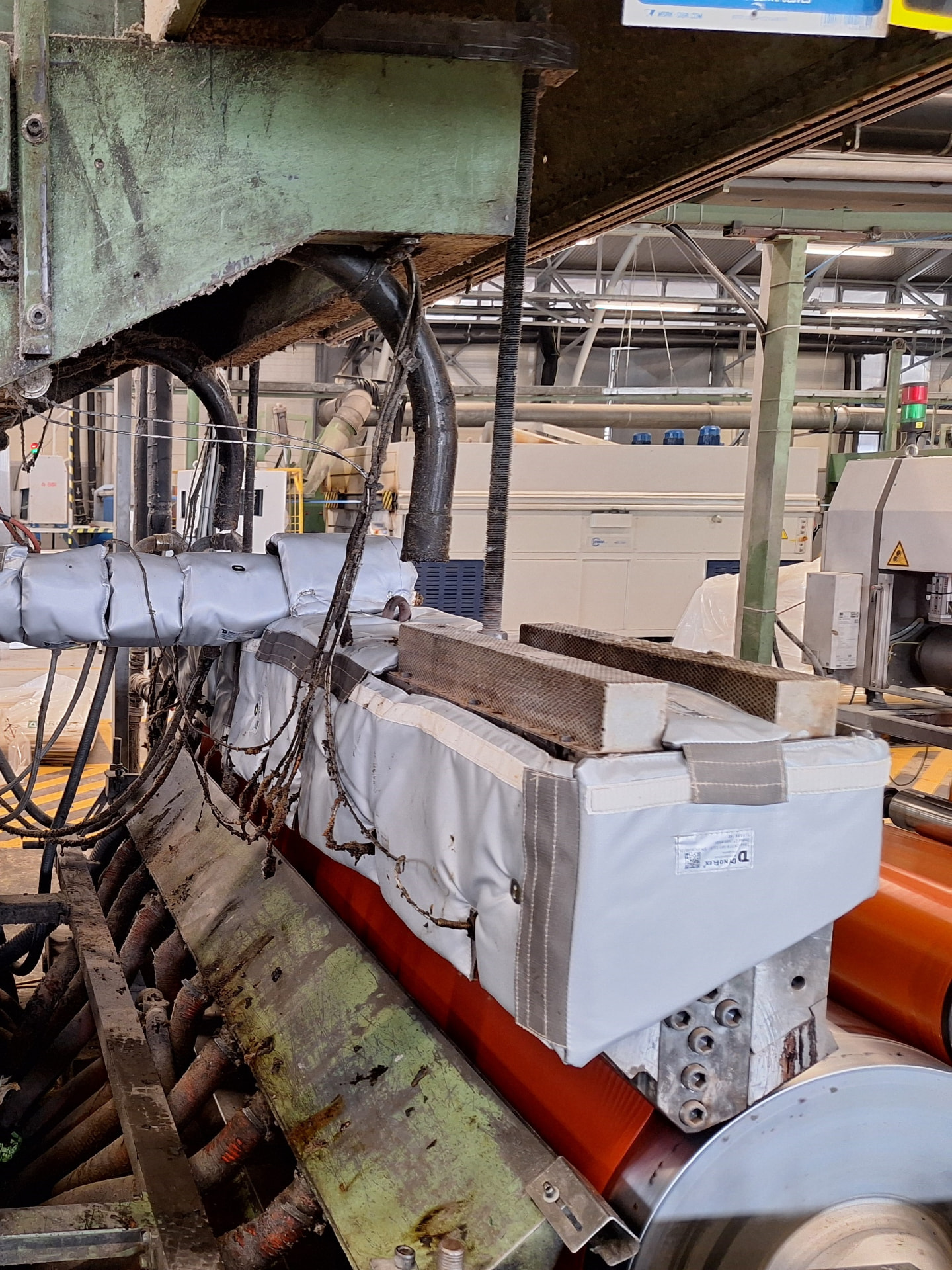
    The heater bands of plastics industry equipment — typically extruders, injection moulding machines and film blowing lines — operate with significant heat loss. Because surface temperatures are often above 200 °C and heating is electric, insulation projects on this equipment pay back extremely quickly. Due to frequent heater band replacements and maintenance work, insulation jackets are the optimal solution on these surfaces as well.

    Our process

    End-to-end insulation solution

    Six steps from survey to warranty inspection — click a segment for details.

    COMPLETE
    SERVICE
    123456
    Step 01 / 06

    On-site survey

    Thermographic inspection

    We inspect every uninsulated surface with specialised instruments and modern thermal cameras.

    Let's survey your facility's energy losses together

    Free initial consultation and a tailored quote within 2 business days.

    Dynoteq - Industrial Insulation logo

    Industrial insulation and energy efficiency solutions for manufacturing companies, power plants and chemical facilities. Engineering precision, proven returns.

    Where to find us

    Map

    © 2026 Dynoteq Kft. All rights reserved.
    Privacy
    Free assessment
    Dynoteq AI Assistant
    Usually replies in minutes
    Hi! I'm Dynoteq's AI assistant. Ask me anything about our industrial insulation services, divisions, or the TIPCHECK audit!
    AI-generated answer — for accuracy please contact us.

    Cookie Settings

    This site uses cookies to operate and improve your experience.

    Privacy policy